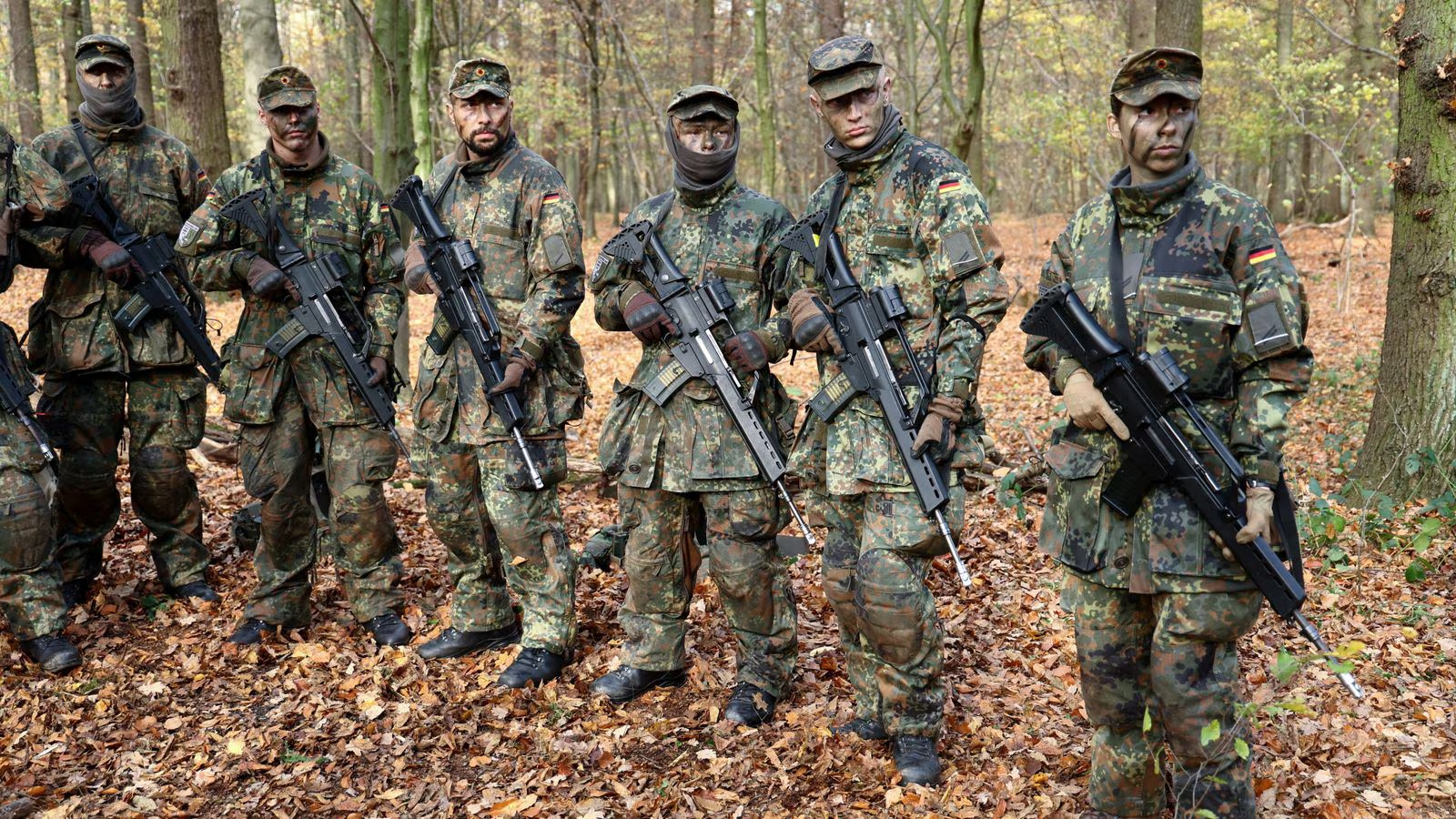
The Bundeswehr has found itself at the center of a major scandal involving sexual harassment, far-right extremism, and drug use within one of its most privileged units. The affair threatens to undermine the authorities’ efforts to strengthen the armed forces and attract new recruits at a moment when Germany is seeking to expand its military capacity.
Prosecutors are examining more than a dozen allegations against servicemen from the 26th Airborne Regiment—an elite army unit stationed in the city of Zweibrücken in the federal state of Rhineland-Palatinate. The investigations include claims of the display of Nazi symbols, the use of illegal substances, and other serious breaches of discipline.
Defense Minister Boris Pistorius said he was “shocked” by the revelations, stressing that such conduct “runs sharply counter to the Bundeswehr’s core values.” The disclosures, however, have cast a shadow over the launch of a new voluntary service program for 18-year-olds—one of the key tools for replenishing the ranks amid growing concerns over Russia’s actions.
The scandal has once again called into question the internal culture of the armed forces at precisely the moment when Germany is seeking to strengthen its role both at home and abroad. Chancellor Friedrich Merz has previously pledged to turn the Bundeswehr into Europe’s strongest conventional army.
Agnieszka Brugger, a Green party lawmaker and member of the Bundestag’s defense committee, warned that the developments deal a blow not only to a single unit but to “an important service carried out by thousands of servicemen and women.” In her words, “this is a major problem at a critical moment, when the Bundeswehr and politicians need to attract the most capable people into service.”
The 26th Airborne Regiment, numbering about 1,700 personnel, is considered one of the most combat-ready units in the German army. Its troops have taken part in overseas missions and evacuations from conflict zones, including Afghanistan, Mali, and Sudan.
The first details of the misconduct emerged in October 2025, when a local newspaper received an anonymous tip about an investigation into individual soldiers suspected of performing Nazi salutes, photographing colleagues in showers, using drugs, and wearing uniforms styled after Nazi imagery. The army later confirmed that it had begun a discreet internal review as early as June—following complaints from female paratroopers, who make up about 5 percent of the regiment’s personnel.
It also emerged that the unit’s commander, Colonel Oliver Henkel, has been suspended from his post. In a copy of his farewell address obtained by a local television channel, he denied any link between his departure and the allegations, saying: “My conscience is clear, and I am convinced that truth and justice will ultimately prevail.”
Over time, the scope of the accusations expanded significantly. The Frankfurter Allgemeine Zeitung published an in-depth investigation citing sources within the military who claimed that an “ultra-right, openly antisemitic clique” had been operating in Zweibrücken, using slurs such as “Jewish pig.” According to these accounts, women were subjected to pornographic jokes, rape threats, and incidents in which colleagues exposed their genitals to them.
Lieutenant General Harald Gante told the newspaper that he was “virtually left speechless” by what had taken place—“both by the events themselves and by the way they were handled.” He added that adherence to discipline and democratic values is precisely what distinguishes the Bundeswehr “from Russian soldiers.” His remarks came just days before Merz’s statement about the possible involvement of German troops in enforcing a future ceasefire in Ukraine.
Der Spiegel later reported additional incidents, including allegations that a company commander had pointed a partially loaded pistol at the faces of subordinates. According to the magazine, one soldier underwent surgery after suffering “repeated blows to the genital area and the head” inflicted by instructors.
As the full scale of the affair has come into clearer focus, Pistorius has come under criticism from some members of the Bundestag and segments of the German media—for having commented publicly on the situation only in December.
In total, according to an army spokesperson, the Bundeswehr has reviewed 55 suspects. Three servicemen have already been dismissed, while dismissal proceedings have been initiated against another 19. Sixteen cases have been referred to prosecutors for criminal investigation—primarily involving drug offenses, as well as incitement to hatred and the use of banned extremist symbols.
The military also announced the launch of a so-called “action plan for the airborne forces,” aimed at improving the quality of command and providing clearer guidance on core values. “There is no place for violence, sexism, or extremism in our Bundeswehr,” a spokesperson said. “We expect soldiers and civilian staff to actively defend the free democratic order. Where that is not the case, we will act decisively.”
This was not the first such test for Germany’s armed forces. In 2020, the defense ministry disbanded an entire elite special forces unit, saying that “toxic leadership” had fostered extremist tendencies. In 2022, a former serviceman was sentenced to more than five years in prison for plotting the убийство of politicians while posing as a Syrian refugee.
Thomas Revkamp, head of the Bundestag’s defense committee, described the allegations as “shocking” and “unacceptable,” while stressing that they do not reflect the reality of an army numbering about 180,000 personnel. A study published last year by the Bundeswehr’s Center for Military History and Social Sciences found that only 0.4 percent of servicemen and women hold far-right views—well below the level of more than 5 percent that the authors estimate for the population at large.