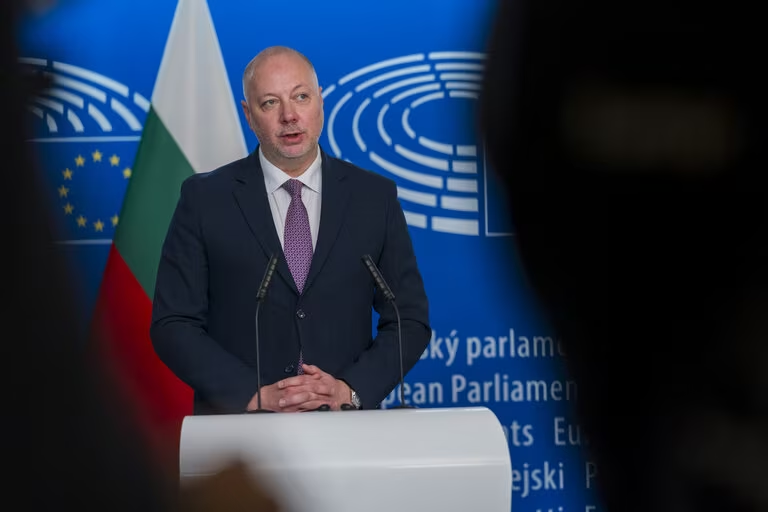
On Thursday, December 11, Bulgaria’s Prime Minister Rosen Zhelyazkov resigned after several weeks of mass protests that swept cities across the country. His decision came just hours before yet another confidence vote in the Cabinet—the seventh since the government took office in January. «We have no doubt that in the upcoming vote of no confidence the government will receive support. But for us, the decisions of the National Assembly matter only when they reflect the will of the sovereign», Zhelyazkov said.
The protests, which began in November, were sparked by a contentious draft budget that increased the tax burden on the private sector while redirecting additional funds to the state. Yet the budget was merely a catalyst. The real force behind the demonstrations was far broader discontent with the government’s direction. What started as an economic grievance quickly evolved into a nationwide movement demanding accountability, transparent governance and a change in leadership.
“We seek to meet society’s expectations. At this moment, as the Constitution stipulates, authority derives from the voice of the people. We hear the voice of citizens protesting against the government,” Zhelyazkov said. He added: “Both young and old, people from different ethnic communities have called for the resignation. We support this civic energy and encourage it.”
Bulgaria is preparing to adopt the euro on January 1. Roughly half of the population views the move with skepticism, fearing higher prices.