Bulgaria is entering a decisive phase of its euro-adoption preparations amid rising political pressure and street protests. The government has withdrawn its draft budget for 2026 after mass demonstrations against higher taxes—measures the cabinet had framed as part of the fiscal groundwork for joining the single currency. Long-standing allegations of corruption and institutional weakness have amplified public anger over the reforms, once again exposing the fragility of the coalition responsible for steering the budget. The escalating dispute over fiscal policy has cast doubt on the government’s stability on the eve of the eurozone transition and intensified talk of another early election.
Bulgaria’s government on Tuesday withdrew its draft budget after large-scale anti-corruption protests, raising the risk that the country may enter 2026 without an approved financial plan as it prepares to adopt the euro.
Lawmakers halted consideration of the document mid-process following nationwide demonstrations against the planned tax increases. Protesters argued that the authorities were too corrupt to be trusted with imposing a heavier fiscal burden.
The situation has deepened concerns that, on the threshold of eurozone entry, Sofia lacks the political resilience needed to enforce the stringent budget discipline traditionally expected of members of the currency union.
Prime Minister Rosen Zhelyazkov said the ruling coalition was prepared to compromise to secure the budget’s passage. «With only weeks left before Bulgaria joins the eurozone, we cannot shirk responsibility», he told a Tuesday press conference. «We will remove from the draft all provisions that raise concern».
Bulgaria secured approval to join the eurozone in June after a series of delays caused by political instability and failure to meet inflation targets. Populist resistance to the common currency added further complications.
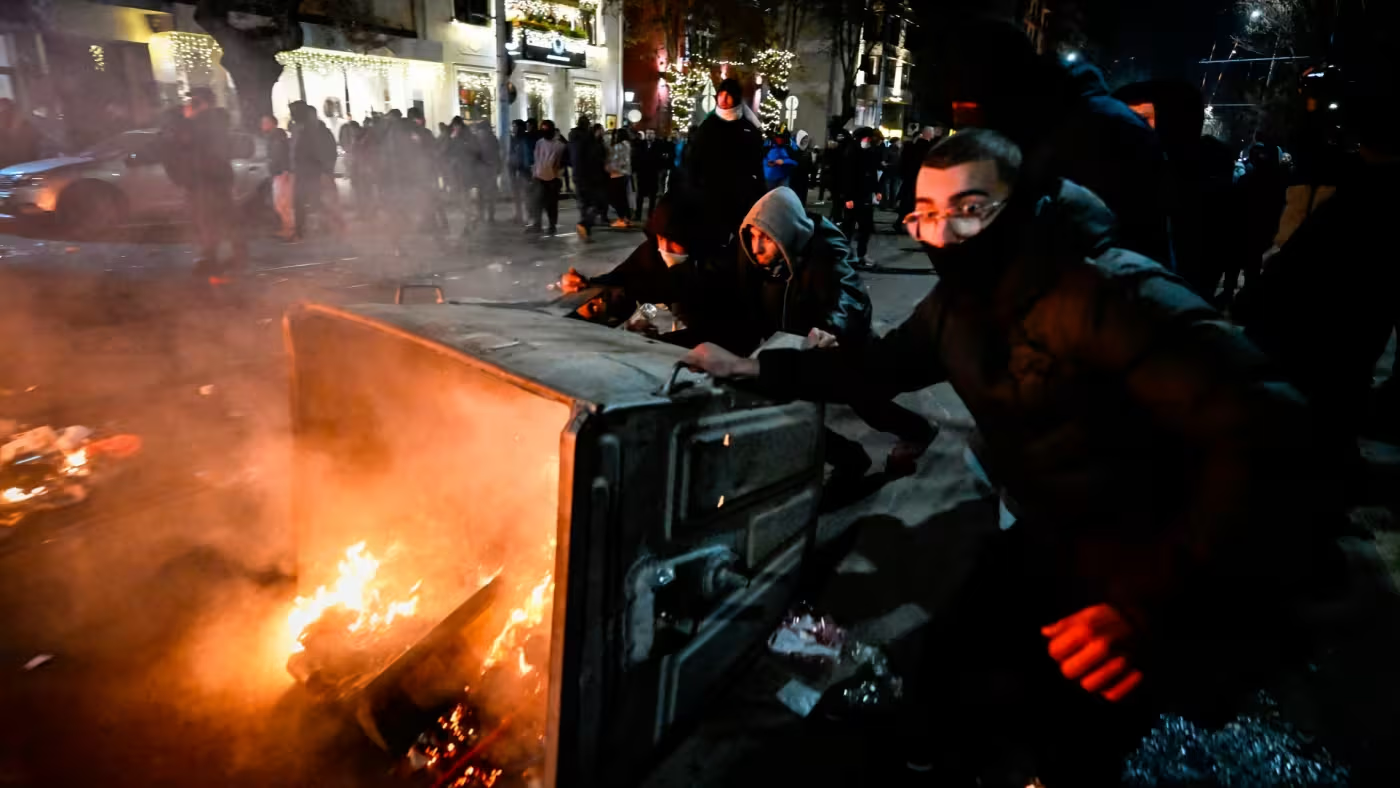
On Monday, tens of thousands of people took to the streets of Sofia to protest the government’s budget plans; some demonstrators overturned rubbish bins and damaged police vehicles.
«In such a state, businesses are squeezed, young people stop dreaming, and everyone is equally poor, equally unfree», former centrist prime minister Nikolay Denkov said ahead of the protest.
A mass anti-corruption protest in Sofia, where demonstrators rallied against the draft state budget for 2026.
At an emergency meeting, the government asked parliament to return the draft budget for revision—a process that is likely to stretch into the new year.
Prime Minister Zhelyazkov’s fragile coalition relies on the backing of the DPS—New Beginning party, controlled by businessman Delyan Peevski. Opposition forces and Bulgaria’s president have demanded an end to this governing arrangement.
Peevski is barred from entering the United States on corruption allegations, and the United Kingdom has placed him under sanctions for «attempts to seize control of key institutions and sectors of Bulgarian society through bribery and the use of his media empire». He denies the accusations.
President Rumen Radev, a former general and pro-Russian figure, on Monday called on the government to resign and call early elections. «This is not a clash between police and protesters, but a provocation by the mafia seeking to pit them against each other», he said. «The violence must stop… Bulgarians have said NO to this government».
In response, Peevski accused «agitators linked to Radev… dragging the country toward anarchy… solely to trigger elections and seize power through bloodshed».
Early elections would be the eighth since 2021, when mass protests triggered a succession of short-lived governments formed by Boyko Borissov’s centre-right GERB party.
A somewhat more durable cabinet was later assembled, yet the current budget crisis has revealed how quickly public confidence in it is eroding.
Mario Bikarski, senior Europe analyst at Verisk Maplecroft, said the political upheaval and delay in adopting the budget «will create financial uncertainty from January» and «limit the government’s ability to respond to potential shocks».
«Concerns about pervasive corruption and Peevski’s influence within the government will persist», he noted. «This guarantees the cabinet’s continued unpopularity».