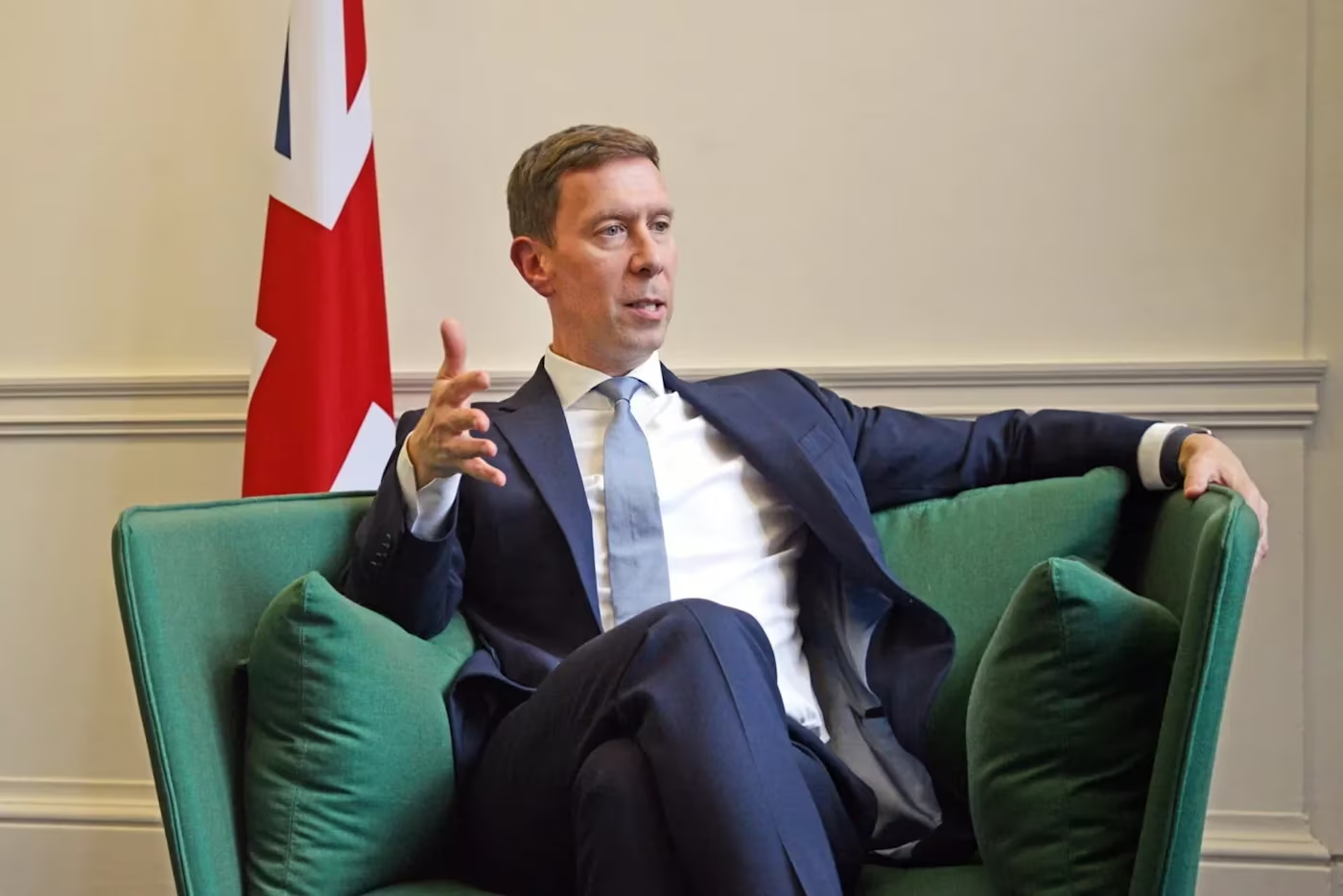
Lord Spencer Livermore, a minister in the British government’s Treasury team, has said the country’s return to the European Union is “an inevitability.” It is a fresh sign that some senior Labour figures are beginning to openly discuss a full reversal of Brexit.
On Monday, June 1, Livermore became the first serving minister to publicly support overturning the result of the referendum on leaving the EU, held almost ten years ago—on June 23, 2016.
“Should we in due course re-enter the European Union?” Livermore said in the House of Lords. “In my personal view, that is an inevitability.”
“Of course the United Kingdom will re-enter the European Union, because it is absolutely in our national economic interest,” he added.
His words go far beyond Labour’s 2024 election manifesto, which set out “red lines”: the party ruled out Britain’s return to the EU single market and customs union, let alone the full restoration of membership.
In recent weeks, Wes Streeting, the former health secretary and a possible contender for the Labour leadership, has begun promoting a more openly pro-European position. He called Brexit a “catastrophic mistake.”
“The biggest economic opportunity is right on our doorstep,” he said last month. “We need a new special relationship with the EU, because Britain’s future lies with Europe—and one day, again, in the European Union.”
Andy Burnham, widely seen as the leading contender to replace Sir Keir Starmer as prime minister, has also said he would like to see Britain return to the EU “in my lifetime.” These remarks have revived a debate that had remained a political taboo for almost a decade.
Later, however, Burnham softened his position, saying he would not campaign on a platform of rejoining the EU in the Makerfield by-election this month. The constituency voted to leave the European Union, and Reform UK is hoping to win the seat.
Against that backdrop, Livermore’s statement, made from the ministerial bench in Parliament, marked a new step, even though he stressed in advance that he was speaking in a “personal view.”
“Brexit itself cost us at least 4% of GDP,” Livermore said, citing estimates by the Office for Budget Responsibility. “The estimates now put it at 6–8% of GDP.”
His intervention also points to a weakening of ministerial discipline as Starmer’s premiership, the publication writes, appears to be entering its final phase. Livermore helped run Starmer’s successful election campaign in 2024.
Lord George Bridges, a Conservative peer and chair of the House of Lords Economic Affairs Committee, said: “It is a sign of how chaotic this government has become if ministers are now expressing their personal views on such an important issue.”