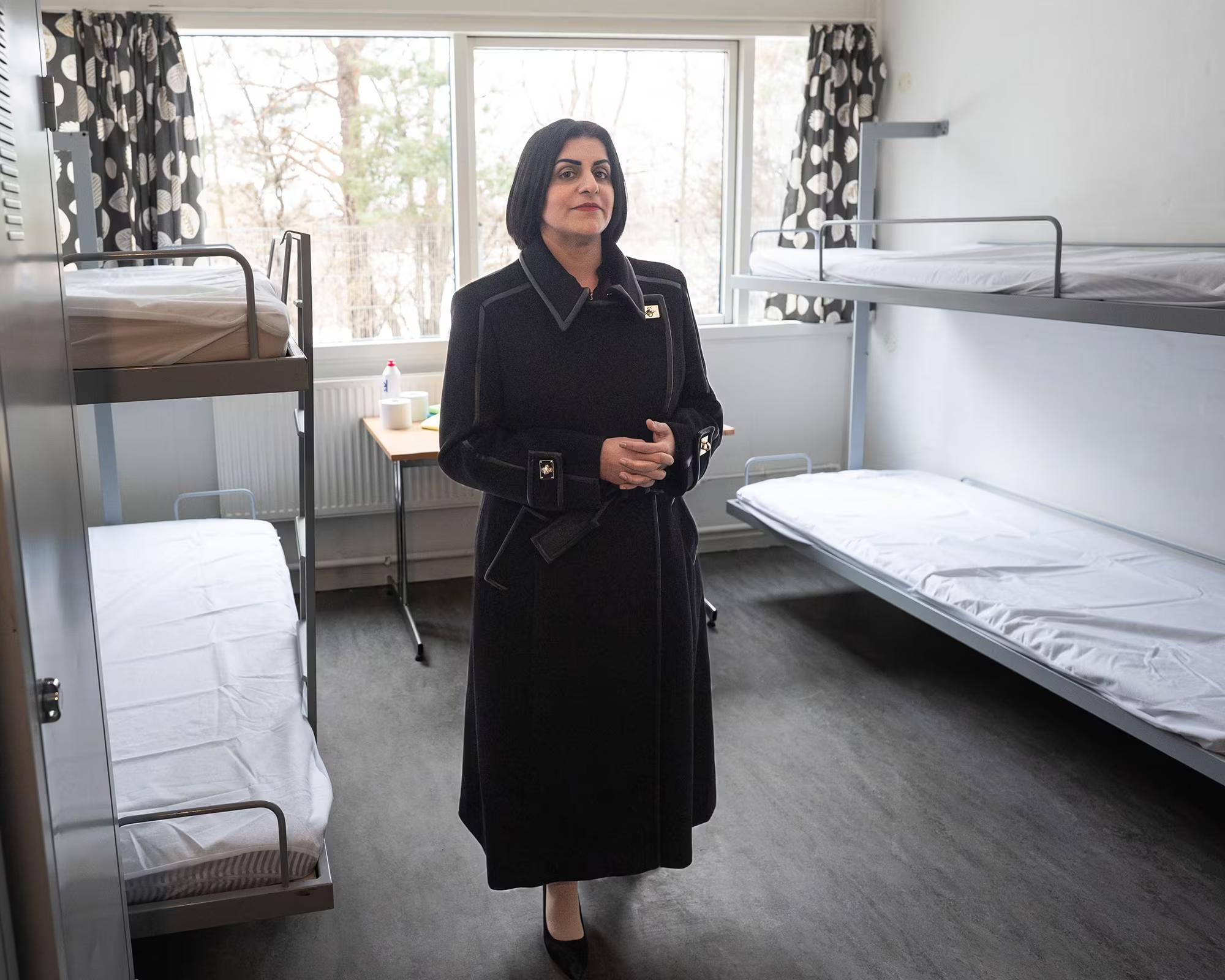
UK Home Secretary Shabana Mahmood has announced a radical overhaul of asylum rules: from March 2, all refugees will be granted status for just 30 months, and it will be deemed temporary from the outset. Once this period expires, protection may be extended—but only if the need for asylum still exists. For those whose countries are deemed safe by the British government, an expectation of return will apply.
The decision has raised concerns among charities working with refugees. Its announcement came amid an internal debate within the Labour Party, where some MPs and trade unions had urged the leadership to shift course in a more progressive direction after the party finished third in the by-elections in Gorton and Denton.
The changes also предусматривают extending the waiting period to up to 10 years for some foreign nationals before they become eligible for permanent residence. In an interview with the Guardian, Mahmood urged Labour MPs to back the reforms, warning that failure to do so could leave the country facing a government led by Nigel Farage that would deport refugees “to certain death.”
She said the proposed course does not alienate Labour’s traditional electorate but reflects the concerns of people increasingly frustrated that “public services are overstretched.” Under the new rules, adults and children arriving with their families will be granted 30 months of protection if their asylum claims are approved. At the review after that period, those who still require protection will have their status extended, while the rest will be expected to return home. The new rules will not apply to those who submitted applications before Monday.
Previously, refugees were granted protection for five years, with the right to family reunification and the possibility of applying for permanent residence thereafter. In 2025, just over 100,000 people sought asylum in the UK—4% fewer than the year before. Around half arrived via irregular routes, including crossings of the English Channel in small boats.
Mahmood pointed to the experience of Denmark, which she visited last week. There, the number of asylum applications has fallen by more than 90% over the past decade, even as the government has faced accusations of violating refugees’ rights. The Social Democrats, in power since 2019, have managed to fend off the rise of a populist party by taking a hard line on migration.
“We must ensure that the asylum system does not create pull factors that encourage people to undertake dangerous journeys across the world,” Mahmood said. “Genuine refugees will find safety in Britain, but we have a duty to reduce the incentives that draw people here on such a scale, including those with no lawful claim to protection. Once a refugee’s home country becomes safe and return is possible, that will be expected.”
She said the Home Office already has the resources and administrative capacity to carry out additional annual reviews. “We have the resources and the managerial capability, and I am confident that the reviews will take place and will be based on assessments of the safety of the country to which a person would return,” she said.
Imran Hussain, head of external affairs at the Refugee Council, warned that the new rules would make it harder for people who have endured “unimaginable danger” to rebuild their lives and find work. “Short-term status means that refugee families who have survived war, persecution, and unimaginable threats will face renewed uncertainty every 30 months, which in the long run undermines integration,” he said. According to the council’s estimates, the additional burden could cost up to £725 million and result in 1.1 million repeat case reviews.
Experts doubt that the measures will lead to large-scale returns. Peter Walsh, a senior researcher at Oxford University’s Migration Observatory, noted that of 30,000 Syrian refugees in Denmark, reviews have affected only about 1,200 cases, several hundred statuses have been withdrawn, and as of early 2024 there had been no reports of any actual returns to Syria. “Many remain in the country without legal status, because deportations are neither practically nor diplomatically feasible,” he explained, adding that the impact of the reforms will depend on whether reviews are “superficial” or “substantive.”
The government announced as early as November that it would move toward temporary protection for refugees. Next week, Mahmood is expected to argue that the migration policy—including waits of up to 20 years before eligibility for permanent residence—is fully consistent with Labour Party values. The measures are expected to come into force in the autumn.
In a speech at a think tank, she will warn party colleagues that Labour’s future would be “at risk” if it fails to support “control over levels of migration” to ease pressure on local communities. Broader reforms, including a review of the asylum appeals system, will be folded into a border security, asylum, and immigration bill to be set out in the King’s Speech in May. The legislation is expected to face resistance from Labour members in both houses of parliament.
Mahmood said the party must acknowledge what she called the public’s “legitimate” concerns about migration and accept the need for change. Otherwise, she argued, a government led by Reform would pursue plans to deport hundreds of thousands of people, despite their deserving asylum in the UK. “A Reform government under Nigel Farage would pull up the drawbridge entirely—bringing to an end this country’s centuries-old tradition of tolerance and generosity,” she said, adding that deportations would occur “on such a scale that people would be sent back to places where certain death awaits them.”
A Reform UK spokesperson rejected the claims. “Shabana Mahmood’s comments are absurd. Reform UK has consistently said that our priority is tackling illegal migration and restoring control of Britain’s borders. Britons deserve honesty, not hysteria.”