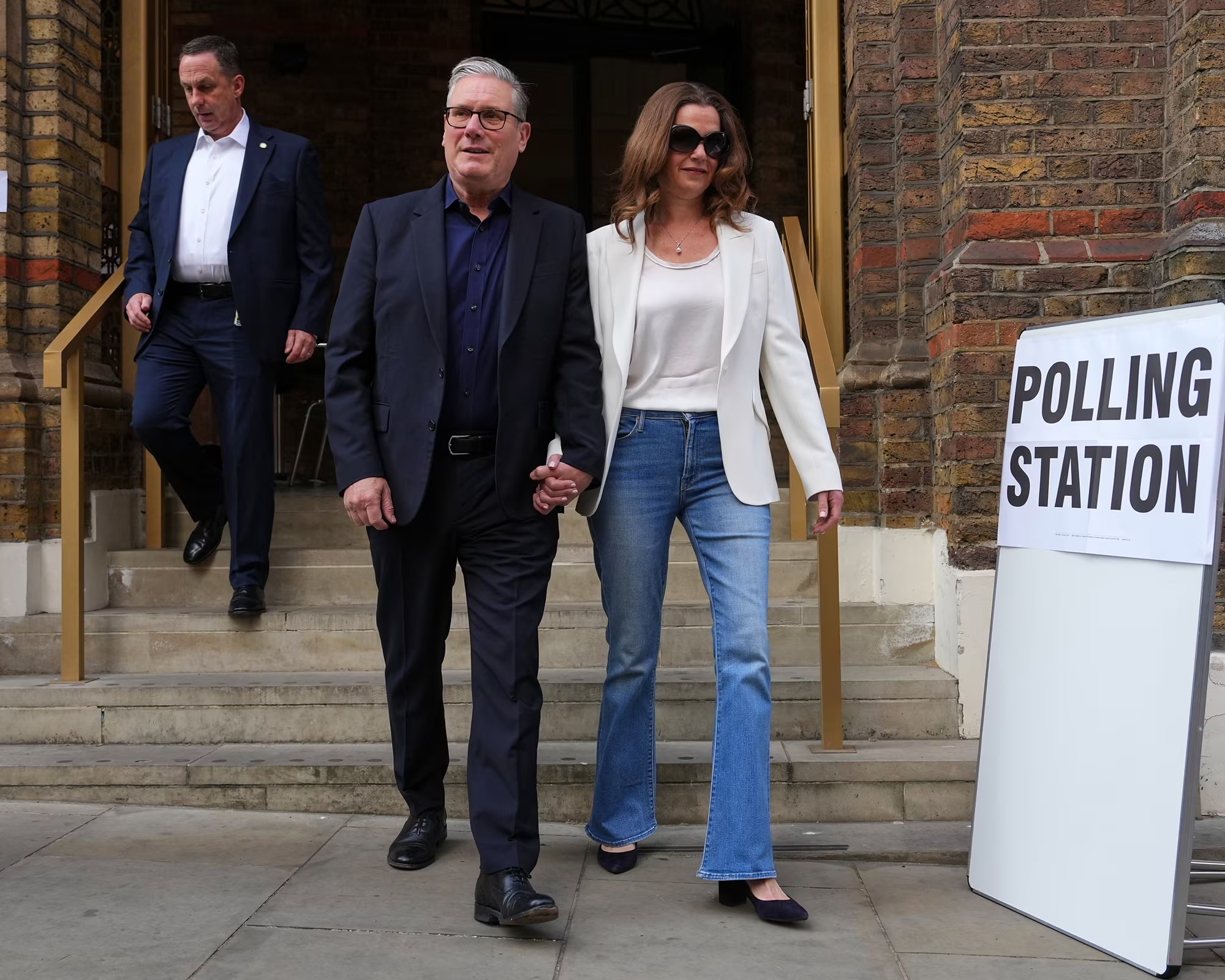
Voting has begun across England, Scotland, and Wales in local, mayoral, and parliamentary elections—the largest electoral test for Keir Starmer and the Labour government since the 2024 general election.
The outcome could significantly reshape the political balance both nationally and across individual regions of the United Kingdom. Particular attention is focused on Scotland and Wales, as well as local authorities in England.
The elections are widely viewed as the first major test for Britain’s increasingly fragmented multiparty political system. They come amid months of declining support for both Labour and the Conservatives, alongside rising backing for Reform UK, the Greens, and the Liberal Democrats.
The vote covers the parliaments of Scotland and Wales, as well as 136 local councils in England, where 5,014 seats are being contested. Elections are taking place in all 32 London boroughs, more than a dozen district councils, six unitary authorities, six county councils, and three borough councils. Another 73 councils are electing either half or one-third of their members.
Six mayoral races are also being held simultaneously—in Croydon, Hackney, Lewisham, Newham, Tower Hamlets, and Watford.
Polling stations for the local elections will remain open from 7:00 a.m. to 10:00 p.m. The first results are expected around 12:30 a.m. Friday, with the main wave of returns beginning to arrive at roughly 3:00 a.m.
By 7:00 a.m. Friday, around one-third of councils are expected to have declared their results. The most closely watched outcomes, including mayoral races in London boroughs and results from Manchester and Leeds, are expected closer to midday.
By the end of Friday, another 80 councils are expected to complete their counts. However, final results, including those from Croydon, Tower Hamlets, and Hastings, are not expected until Saturday afternoon.
In Scotland and Wales, the broader picture is expected to become clearer by 4:00 p.m. Friday. Additional local election results will continue to arrive throughout the afternoon and evening.
Counting in the mayoral contests will begin only on Friday. Hackney and Newham plan to announce results at 1:00 p.m., Watford at 2:00 p.m., Lewisham at 3:00 p.m., Croydon at 4:00 p.m., and Tower Hamlets at 6:00 p.m.
Following the May 2025 local elections, Labour controlled 34% of council seats in England, down 2 percentage points from 2024. The Conservatives fell to 26%, losing 4 points. The Liberal Democrats held 19% of seats, up 1 point. The share held by other parties rose from 11% to 12%. The Greens remained at around 5%, while Reform UK increased its presence from zero to 5%, winning 677 council seats.
In Scotland, voters are electing 129 members of the Holyrood parliament, which is responsible for legislation on education, healthcare, and transport. Defense, foreign policy, and immigration remain under the authority of Westminster.
In the 2021 Scottish parliamentary election, the Scottish National Party won 64 seats—one short of an outright majority. The Conservatives came second with 31 seats, Labour secured 22, the Greens won eight, and the Liberal Democrats took four.
In Scotland, polling stations are open from 7:00 a.m. to 10:00 p.m. Unlike in previous years, counting will begin Friday morning, with the first results expected by midday and most constituencies projected to complete their counts by evening.
In Wales, voters will elect 96 representatives across 16 constituencies, with each returning six members to the Senedd. The electoral system has been changed: voters now cast ballots for parties rather than individual candidates. Seats will be allocated proportionally based on the number of votes each party receives in every constituency.