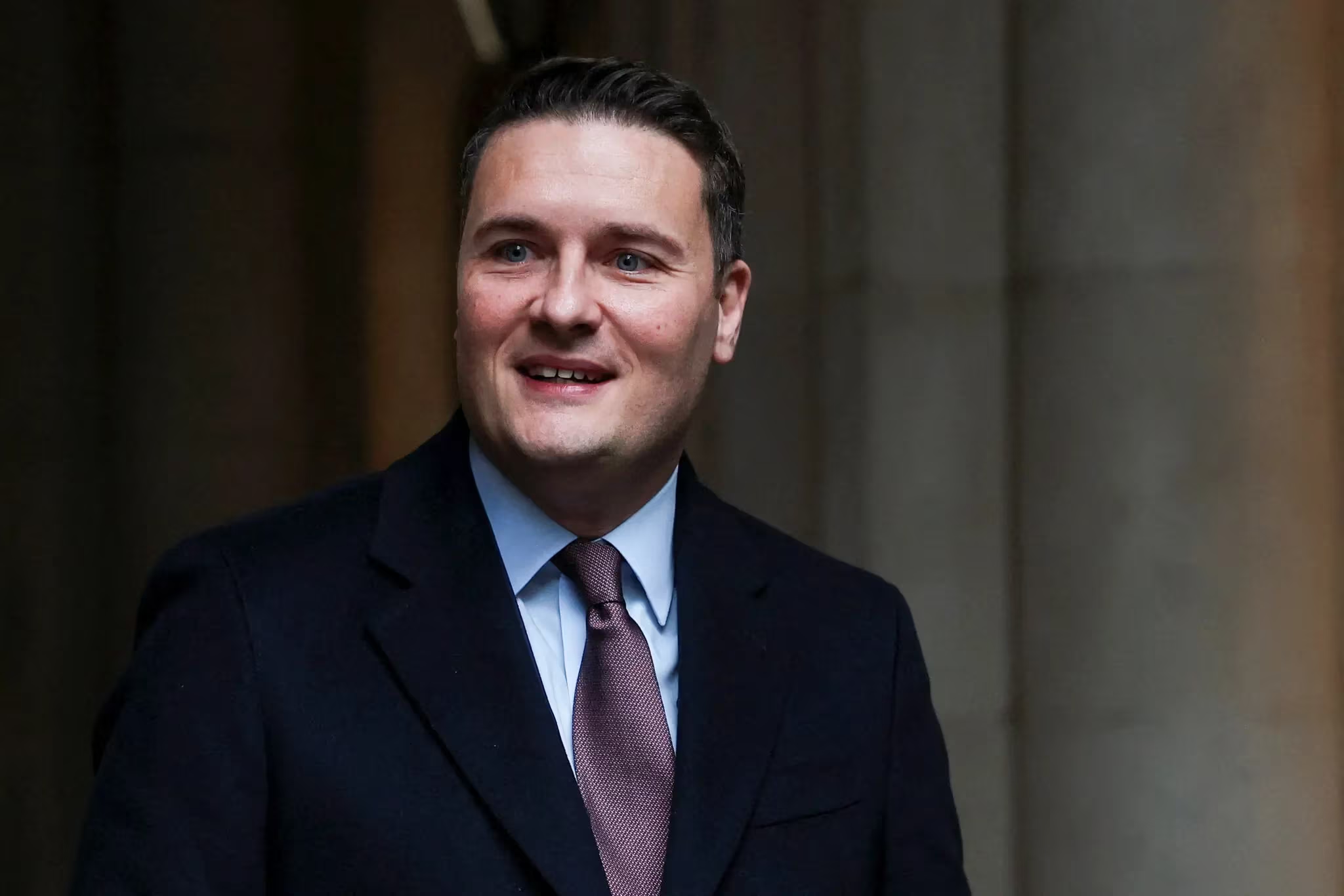
Britain’s Health Secretary Wes Streeting resigned from his post, increasing pressure on Prime Minister Keir Starmer following Labour’s disappointing performance in local elections. While Streeting did not announce an immediate bid for the party leadership, many see his resignation as a potential step toward a future political campaign.
In his resignation letter, Streeting sharply criticized the government’s direction: “Where we need vision, we have a vacuum.” He also wrote that, in his view, Starmer would not lead Labour into the next general election and called for a broad debate over the party’s future direction.
To formally trigger a leadership contest, Streeting would need the support of 81 Labour members of Parliament. It remains unclear whether he has secured that level of backing or whether his resignation will immediately spark a battle for control of the party.
Starmer has come under pressure following Labour’s heavy losses in local elections but has refused to resign.
If an internal contest begins in the coming weeks or months, Streeting would likely be viewed as one of the leading candidates from the party’s more centrist and right-leaning wing. That faction, however, currently lacks strong support among Labour’s grassroots membership, which traditionally holds more left-wing views.
The 43-year-old Streeting grew up in a working-class family in east London. Born to teenage parents, he spent part of his childhood in social housing. He became the first person in his family to attend university.
In memoirs published in 2023, he described his upbringing and path into politics in detail. He said both of his grandfathers—each named Bill—had a profound influence on him. One had served time for armed robbery, while the other served in the Royal Navy during World War II and supported the Conservative Party.
Streeting’s political ambitions emerged during his years at Cambridge, where he studied history and led the student union. He later became head of the National Union of Students.
During his studies, Streeting publicly came out as gay and later said he struggled for years to reconcile his religious beliefs with his sexual identity.
Before entering politics, he worked in the nonprofit sector on issues of social inequality.
Streeting entered Parliament in 2015, representing Ilford North in Greater London. However, in the 2024 election he narrowly retained his seat, defeating an independent candidate whose campaign focused on Gaza by just 528 votes.
Streeting frequently emphasizes his background and his preference for speaking directly to voters. On his website, he wrote: “You won’t always agree with me, but you’ll always know where I stand.”
Keir Starmer appointed him health secretary in 2024. Thanks to a reputation as one of the government’s most effective communicators, Streeting often became one of the cabinet’s leading public voices.
According to the politician, his work was shaped by personal experience—he was diagnosed with cancer at the age of 38.
During his tenure, the National Health Service achieved some reduction in treatment backlogs that had surged after the pandemic. Yet one of the major unresolved challenges remained prolonged strikes by junior doctors. Despite pay increases following Labour’s return to power, medical staff continue to demand further salary increases.
Streeting is considered a political centrist and enjoys support among moderate and right-leaning MPs within the party. However, the final decision in any leadership race rests with Labour’s rank-and-file members, whose views are generally further to the left.
Critics of Streeting have also pointed to his ties with Peter Mandelson, who was previously removed from his role as British ambassador to Washington following controversy surrounding his contacts with Jeffrey Epstein.
Streeting himself said this year that he was never a close friend of Mandelson. According to him, they met roughly once a year in group settings, and their interactions were largely limited to discussions and advice on political matters.
“I knew him, but not very well, and I now worry that he thrived within our political culture,” Streeting wrote.