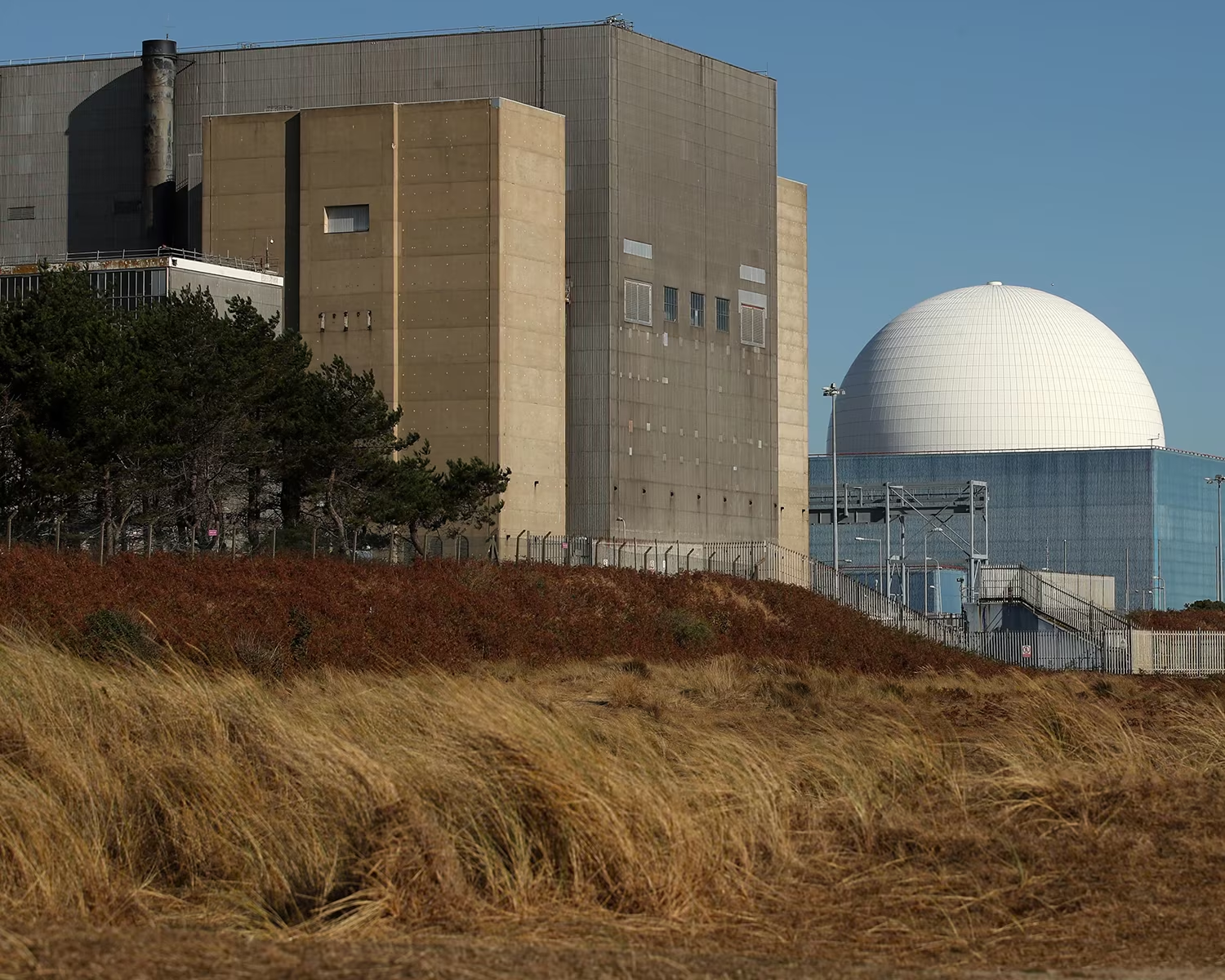
Ed Miliband has unveiled a plan to cut regulation, costs, and bureaucratic procedures in order to accelerate the construction of nuclear power stations in Britain by the end of next year.
The British government said the changes, which it intends to implement as early as this year, would represent a “win—enabling the construction of critical infrastructure while preserving nature and the environment.”
However, the initiatives immediately drew criticism. Ministers were accused of “irresponsible deregulation” and of creating risks for the natural environment.
The reform envisages implementing recommendations from a review prepared last year by the nuclear regulatory task force. It was led by John Fingleton, the former head of the Office of Fair Trading. The document called for revising an “overly complex” and “bureaucratised” system that “prioritises procedure over a safe outcome.”
Energy Secretary Miliband said: “As the current conflict in the Middle East demonstrates, we must move further and faster in building clean energy so that we can break away from volatile fossil-fuel markets and ensure our country’s energy security.
A key part of this task is accelerating the creation of infrastructure in a way that both reduces costs and delivers better outcomes for nature.”
In June, Miliband announced a £14.2 billion programme to build a new nuclear power station. The plan includes multi-billion-pound investments in the Sizewell C project on the coast of Suffolk, as well as the development of small modular reactors (SMRs).
On Friday, March 13, Environment Minister Emma Reynolds published the regulatory justification for a Rolls-Royce project that could make the company the first to attempt building small modular reactors in the United Kingdom.
The government said that once the new rules are introduced, such mini nuclear plants will likely no longer face such lengthy approval procedures.
“To strengthen the country’s resilience, bolster energy security, and ensure economic growth, we need nuclear power,” said Chancellor Rachel Reeves. “That is why we are reforming the system—scrapping duplicative or overly complex guidance, rules, and regulations that have held back our nuclear ambitions.”
According to the government, the foundation of the reform is a shift to a regulatory system that will be “proportionate, focused on real risks and based on evidence,” while still “effectively protecting nature and biodiversity.”
Defence Secretary John Healey said: “In this new era for defence, our nuclear weapons deter the most extreme threats to national security—sending the ultimate warning to anyone who might seek to harm us.”
However, leading environmental planning lawyer Alexa Culver of RSK Wilding sharply criticised the plans. “No ecologist or environmental specialist was invited to help develop these proposals in a way that could plausibly be described as a ‘win’ for nature.
This is irresponsible deregulation at a moment when the true human and national costs of nature’s degradation are becoming increasingly clear.
Recent high-profile and damaging environmental scandals—such as those in the water sector—show that regulation in such areas is inherently complex and easily manipulated when it is ‘simplified’ without checks and balances. The government had an opportunity to build resilience into its industrial strategy, but it chose not to.”
The authorities also said that under a specialist training programme more than 500 doctoral candidates will be trained—four annual cohorts will increase the current inflow of researchers in the field of nuclear energy fourfold.
In addition, the government will allocate £65.6 million to seven research programmes to be carried out by universities across the country together with industrial partners prepared to provide matching funding.
“Nuclear power is essential for ensuring energy independence and achieving net-zero targets,” said Charlotte Brampton-Childs, the GMB union’s national officer for the nuclear sector. “Our members are ready to build the next generation of nuclear power across the United Kingdom.”
The Nuclear Regulatory Reform Taskforce was established by Keir Starmer in February after the government pledged to scrap “outdated rules” and sharply reduce regulation in order to “get Britain building again.”
In December, Starmer endorsed its recommendations, saying he intended to apply this approach in shaping the government’s broader industrial strategy.