
Bitcoin retreated from a six-week high amid a broader shift away from risk, as global financial markets came under pressure from mounting concerns over an escalation of the conflict in the Middle East.
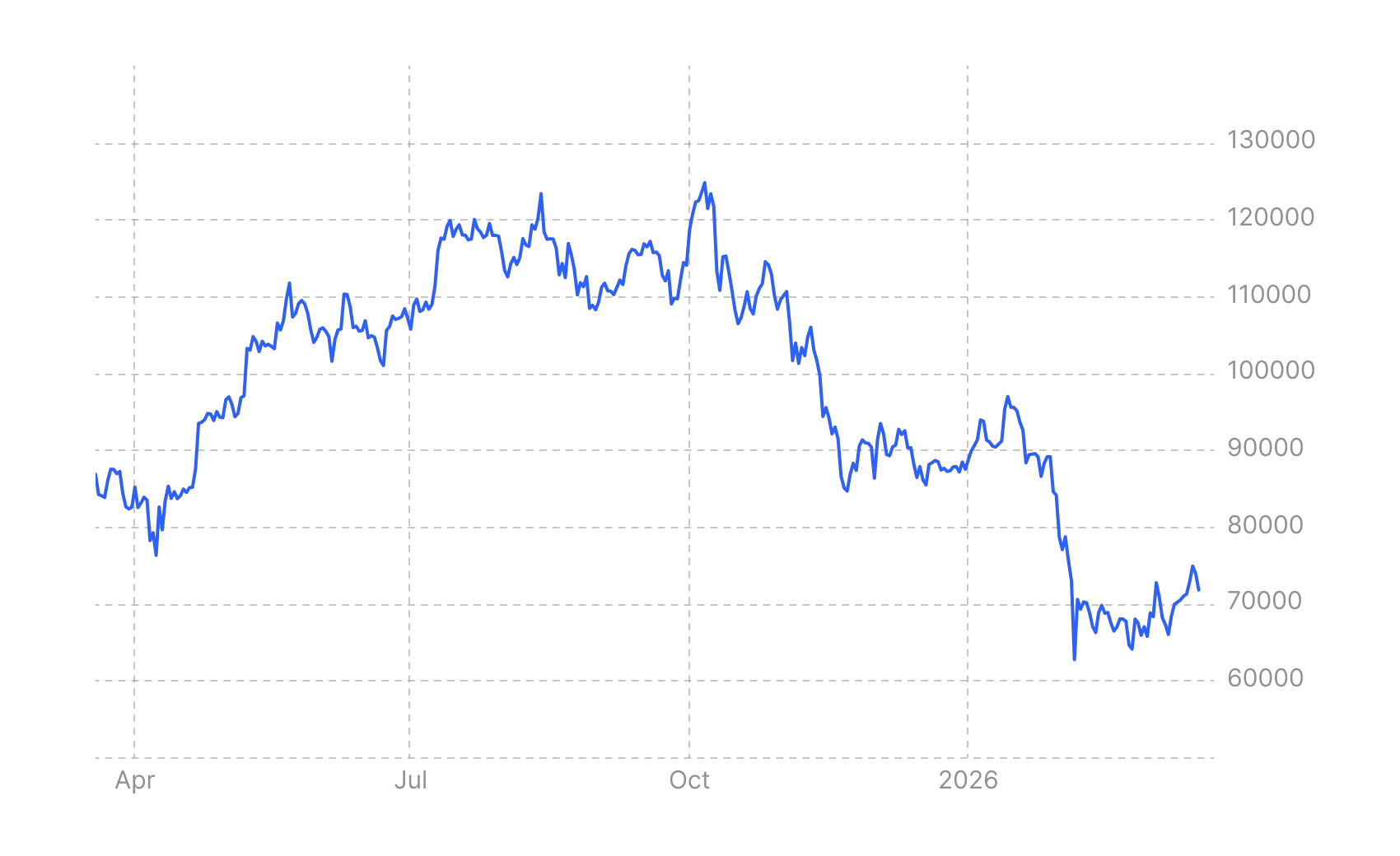
The largest cryptocurrency fell as much as 3.6% on Wednesday—to around $71,900 in New York. Earlier in the week, Bitcoin had climbed to nearly $76,000, its highest level since early February. Smaller, more volatile tokens also came under pressure, with Ether and Solana each declining by about 5%.
Bitcoin to U.S. Dollar Exchange Rate
“The market has shifted into risk-off mode following reports of an Israeli strike on the South Pars gas facility in Iran,” said Hanson Birringer, managing director at Flowdesk. “We are seeing weakness in crypto markets as a consequence, alongside a sell-off in technology stocks.”
The decline fits a familiar pattern of recent weeks: attempts to establish a foothold above $70,000 have repeatedly met resistance. Short-term holders continue to take profits at these levels, absorbing momentum before a sustained breakout can form, according to data from analytics firm Glassnode.
Bitcoin remains roughly 40% below its all-time high of around $126,000, reached in early October. Demand has softened amid a combination of factors—including shifting expectations for U.S. monetary policy, geopolitical instability, and a pullback in institutional interest.
Signals from the spot market remain mixed but broadly point to gradual improvement, while on-chain activity remains relatively subdued, the firm said in a recent report, adding that “overall, market conditions are showing signs of stabilization and gradual recovery.”
At the same time, inflows into exchange-traded funds point to a return of institutional confidence. Net inflows into U.S.-listed spot Bitcoin ETFs exceeded $750 million over the past week—marking a third consecutive week of positive momentum.