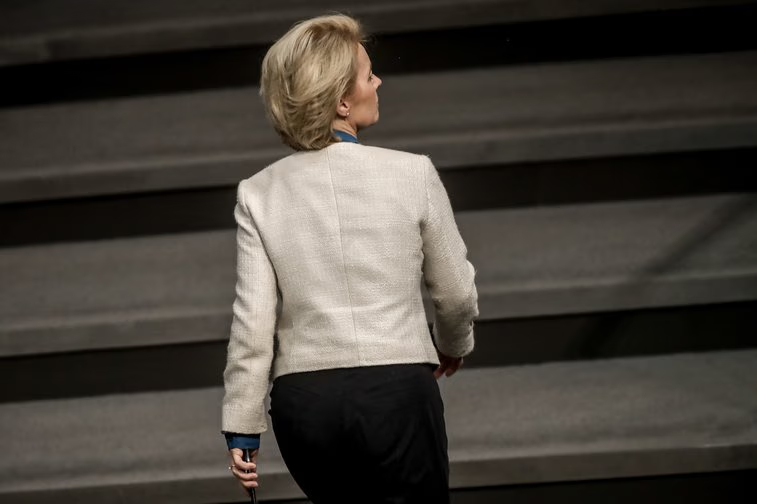
On December 2, the Belgian federal police raided the European External Action Service in Brussels and several buildings of the College of Europe in Bruges. The investigation concerns possible misuse of EU funds and alleged favoritism in awarding a contract for a training program for future diplomats. The scale of the operation and the status of those detained turn the case into a test for the European Commission: the probe touches figures closely linked to EU institutions and could create political risks for Ursula von der Leyen, who is already under pressure over transparency and governance issues.
Ursula von der Leyen has been confronted with the most serious challenge to the EU’s accountability system in decades—the fraud investigation has ensnared two of Brussels’ most influential figures and threatens to escalate into a full-blown crisis. Exactly one year into her second term as Commission president, von der Leyen, already responding to questions over her openness and working amid growing tensions with the EU’s foreign policy apparatus, is now forced to find a way to distance herself from a scandal rooted in the early years of her tenure.
A statement by the European Public Prosecutor’s Office on Tuesday announcing the detention of the former head of the EU’s foreign policy arm and a senior diplomat currently serving in von der Leyen’s Commission was seized upon immediately by her critics, who renewed calls for a fourth vote of no confidence. “Trust in our institutions is at stake,” said Manon Aubry, co-chair of the Left group in the European Parliament.
If the allegations are confirmed, it would mark the biggest corruption scandal in Brussels since the collective resignation of the Jacques Santer Commission in 1999 over accusations of financial misconduct. Police detained former Commission vice-president Federica Mogherini, an Italian centre-left politician who oversaw EU foreign policy and headed the European External Action Service from 2014 to 2019, as well as Italian official Stefano Sannino, who served as secretary-general of the service from 2021 until his recent resignation.
The European Public Prosecutor’s Office said it had “serious suspicions” that the 2021–2022 competition to establish a diplomatic academy at the College of Europe, where Mogherini serves as rector, was conducted improperly. If confirmed, the findings could point to breaches of procurement rules, corruption, conflicts of interest, and the disclosure of confidential information.
According to four European officials, the affair appears likely to further inflame the already strained relationship between von der Leyen and the current head of the EU’s foreign policy service, the Union’s High Representative Kaja Kallas. Earlier this year, Sannino left his post as secretary-general and moved into a key role within von der Leyen’s Commission. One EU official defended the Commission president, placing responsibility on the foreign policy service—an autonomous structure under EU treaties, reporting to High Representative Kallas, who is also one of the 27 commissioners. “I know that those who dislike von der Leyen will use this against her, but they will seize on any pretext,” he said. “Because von der Leyen is the most recognizable leader in Brussels, all criticism is directed at her,” he added. “And it is unfair that she could face a vote of no confidence for something the foreign policy service may have done. She is not responsible for the work of all institutions.”
Mogherini, Sannino, and a third individual have not been charged, and their detention does not imply guilt. The investigating judge has 48 hours from the start of questioning to decide on further measures. The European Commission declined to comment on Sannino’s situation. The College of Europe, responding to an inquiry about Mogherini, refrained from providing details, saying it remains “committed to the highest standards of integrity, honesty, and compliance—both in academic and administrative work.”
Why the Investigation Is Straining Relations Within Europe’s Institutions
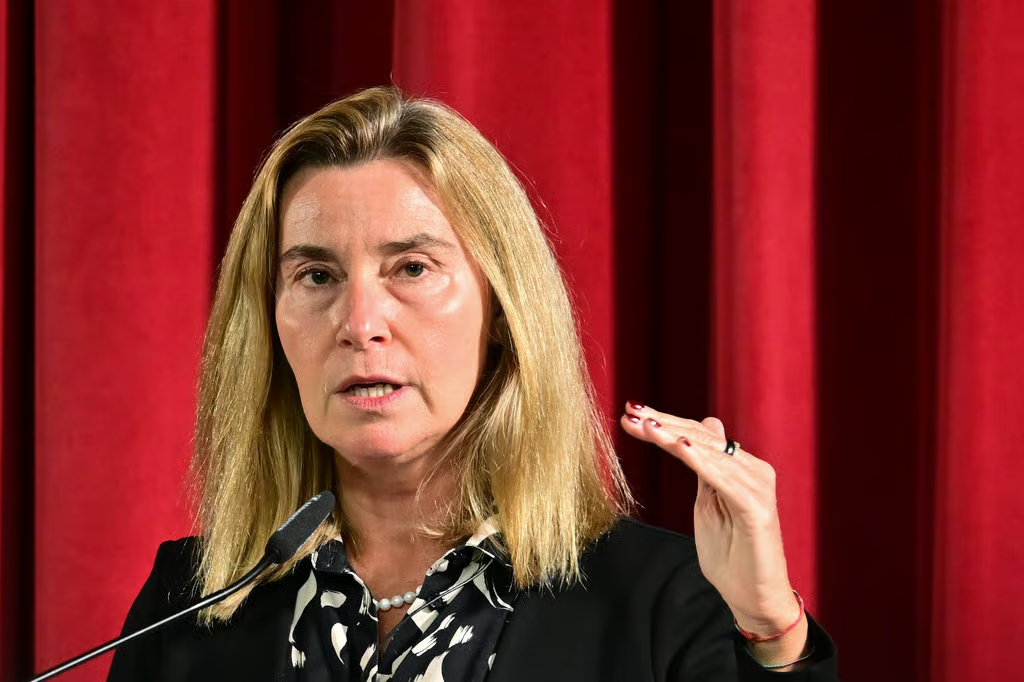
Former European Commission vice-president Federica Mogherini, who headed the European External Action Service from 2014 to 2019.
The investigation is unfolding against a backdrop of rising support for Eurosceptic, populist, and far-right parties—an upswing fueled by voter discontent at a time when the EU is pressing countries inside and outside the bloc over their own corruption scandals. “It’s amusing how Brussels lectures everyone about the ‘rule of law’, while its own institutions increasingly resemble a crime series rather than a functioning union,” wrote Zoltan Kovacs, a spokesperson for the Hungarian government, which itself faces EU criticism.
Romanian MEP Gheorghe Piperea of the right-conservative European Conservatives and Reformists group, who initiated an unsuccessful vote of no confidence against von der Leyen in July, is considering trying again. Russia’s Foreign Ministry spokesperson Maria Zakharova told state media that EU representatives “prefer to ignore their own problems while constantly lecturing everyone else.”
Since the start of the decade, the EU has faced a succession of corruption scandals it has struggled to overcome. Tuesday’s raids followed the 2022 “Qatargate” affair, in which the Gulf state was accused of trying to influence members of the European Parliament through bribes and gifts, as well as this year’s investigation into alleged corruption linked to lobbying activities by the Chinese tech giant Huawei. Those cases involved members of the European Parliament, and Commission officials sought at the time to distance themselves from parliamentary scandals, shifting responsibility onto lawmakers.
The Commission, however, has not been entirely shielded from similar accusations. In 2012, Health Commissioner John Dalli resigned over a scandal tied to lobbying by the tobacco industry. Earlier this year, von der Leyen herself faced criticism from the EU’s General Court, which ruled that she should not have withheld from the public the messages she exchanged with Pfizer’s chief executive at the height of the Covid-19 pandemic.
Yet the current revelations appear far more perilous for the Commission—given the stature of those implicated and the gravity of the suspicions they face.
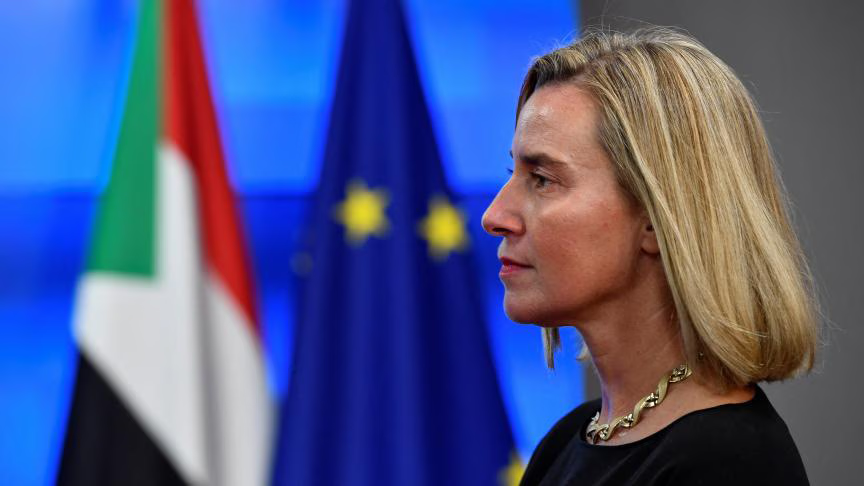
Former EU Foreign Policy Chief Federica Mogherini Detained in Belgium in a Fraud Case
Searches at EIBR and the College of Europe Lead to Three Arrests, Including Senior Former Officials
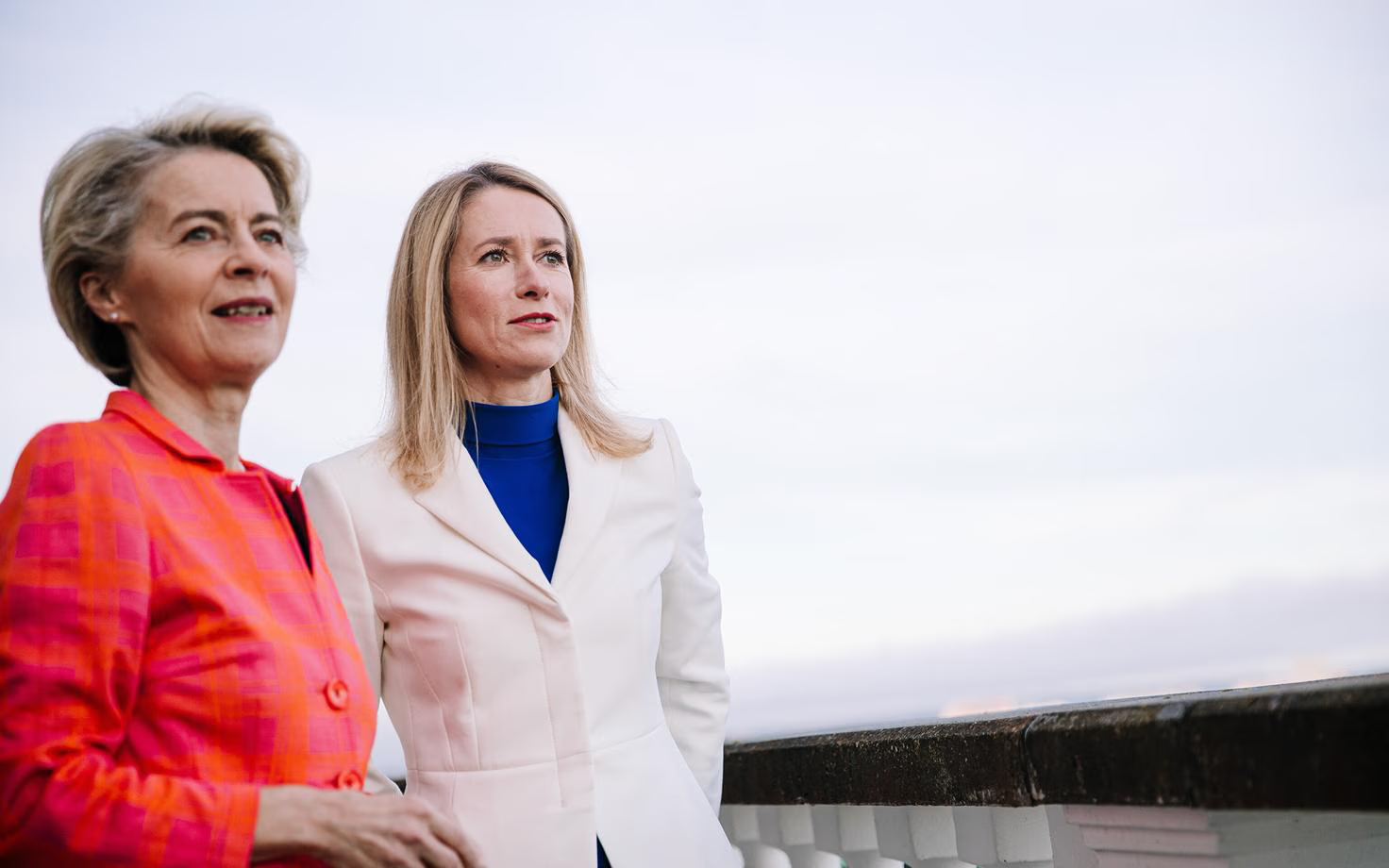
Von der Leyen Seizes Control of the EU’s Foreign Policy
Kallas Is Losing Influence as the European Commission Substitutes for the Bloc’s Diplomacy
Who Mogherini and Sannino Are and What Lies Behind Their Appointments
After completing her tenure as vice-president of the European Commission and head of the European External Action Service, Mogherini assumed the leadership of the College of Europe in 2020. Her appointment drew criticism: detractors argued she did not meet the requirements, lacked the necessary qualifications, and had applied several months after the deadline. In 2022, she took charge of the European Diplomatic Academy—the project now at the centre of Tuesday morning’s raids. Sannino, a former Italian diplomat who served as secretary-general of the EEAS, currently heads the Commission’s department for the Middle East, North Africa, and the Gulf.
Cristiano Sebastiani, a staff representative for Renouveau & Democratie, one of the EU’s largest trade unions, said that if the suspicions are confirmed, the damage to the credibility of the institutions involved—and, more broadly, to public trust in the EU’s structures—would be “catastrophic”. He said he had received “dozens of messages” from EU officials worried about the reputational fallout.
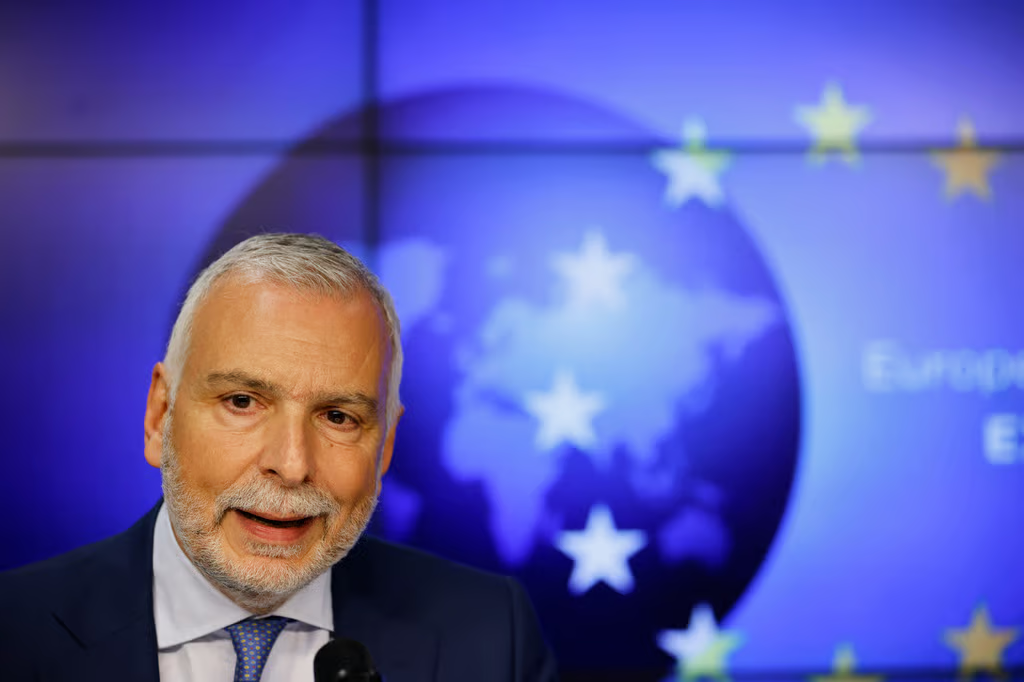
Stefano Sannino, a former Italian diplomat, previously served as the most senior official of the European External Action Service and now leads the European Commission’s department for the Middle East, North Africa, and the Gulf.
“This is a bad story for EU institutions and for the Commission’s services. It is also not good for Europe more broadly, because it distracts from other pressing issues,” a Commission official said on condition of anonymity. “All of this feeds the perception of elitism, of an informal network where favours circulate among insiders. And Mogherini was one of the EU’s most successful High Representatives, so a scandal of this kind harms public diplomacy.”