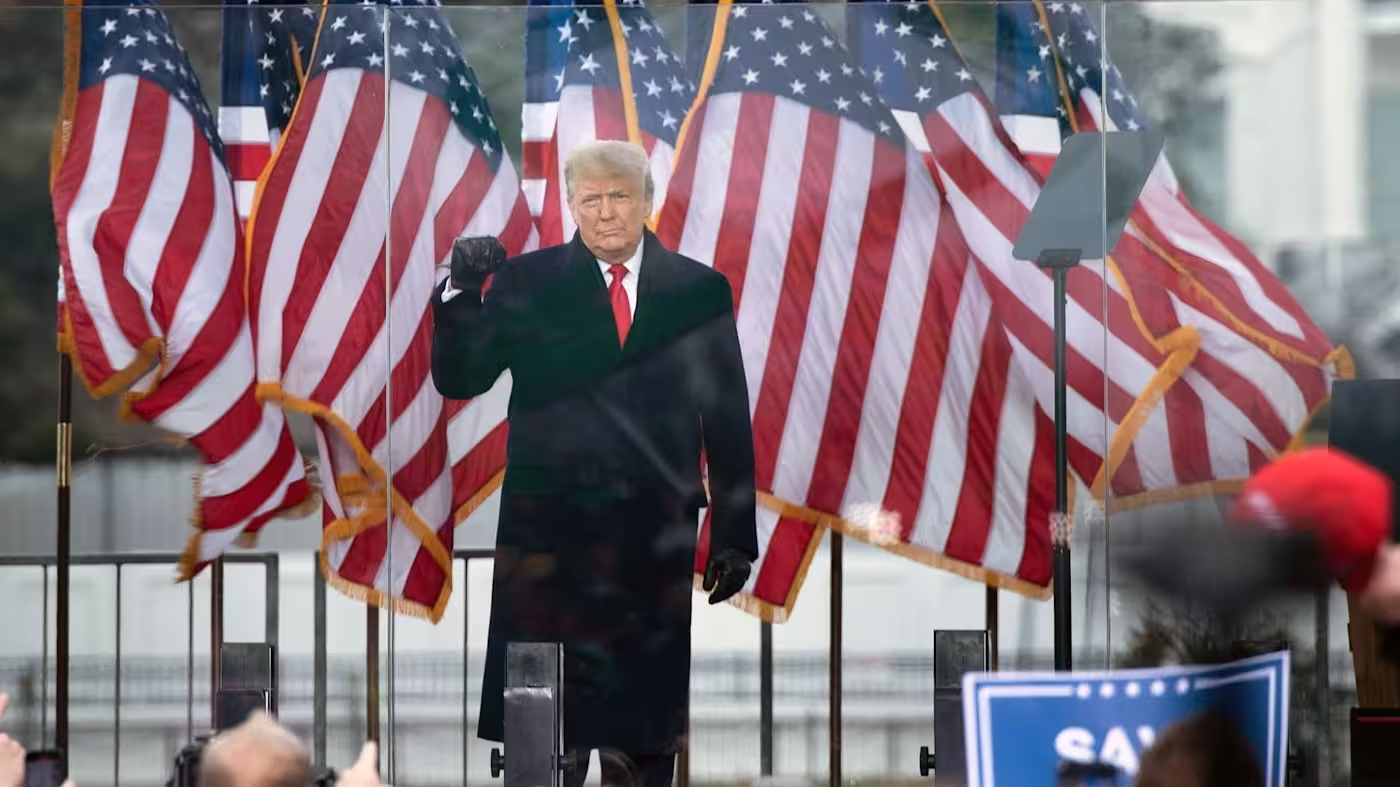
The BBC has asked a U.S. court to dismiss Donald Trump’s $10 billion lawsuit over a documentary that he says was misleadingly edited. The broadcaster argues that a court in Florida lacks jurisdiction to hear the case and warns of the “chilling” effect such lawsuits could have on journalism.
Trump filed the lawsuit in December, seeking damages of up to $10 billion over the documentary, which he described as “fabricated” and defamatory. He brought the claim in a personal capacity in a federal court in Florida.
However, in a new filing submitted in Florida on Monday, March 16, BBC lawyers laid out arguments that the case cannot be heard in the United States and should therefore be dismissed. Executives at the broadcaster view this approach as the fastest way to defend against a lawsuit that could otherwise drag on into next year.
The BBC also warned about the potential consequences of the lawsuit for free speech. The filing notes that the president is “one of the most powerful and high-profile individuals in the world, on whose activities the BBC reports every day—the chilling effect is clear.”
The document stresses that Trump filed a lawsuit in the United States against a British broadcaster over a documentary produced in London, even though, according to the BBC, the programme was never broadcast in the United States. The corporation is asking the court to dismiss the case for lack of jurisdiction.
The BBC said that, contrary to the “false” claims in Trump’s lawsuit, the documentary was never available in the United States either through BritBox or on the BBC.com website, and third-party distributors also did not show it to American audiences. The BBC’s streaming service, iPlayer, is “geoblocked” for viewers outside the United Kingdom.
The filing states that “the president has no basis to ask this court to extend jurisdiction over the defendants.”
In October 2024, the BBC aired a Panorama documentary on its British television channels and streaming platform. The editing of the programme created the impression that the president was urging the crowd to attack the Capitol.
The broadcaster later issued an apology, saying it had “unintentionally” created the “false impression that President Trump had directly called for violent action,” describing it as “an error of judgment” in the editing of his remarks. After the controversy, BBC director-general Tim Davie and the head of the news division, Deborah Turness, resigned.
In the new filing, BBC lawyers also argue that the defamation claim fails to provide convincing evidence that the film caused Trump harm or that the corporation published the material with knowing malice.
“We said from the outset that we would robustly defend this case. Put simply—the documentary was never broadcast in Florida—or anywhere in the United States,” a BBC spokesperson said on Monday. According to the statement, the film was not available to American audiences on iPlayer, online, or on any streaming platforms, including BritBox and BBC Select.
A representative of Trump’s legal team responded that “the BBC is accountable to President Trump for deliberate and malicious defamation that distorted and manipulated his words. No attempts at legal maneuvering can change that fact. President Trump will continue to hold the BBC—and anyone who spreads fake news—accountable.”
The lawsuit against the BBC comes amid Trump’s continuing attacks on American media. Over the weekend he again said that “low-grade” outlets were publishing “deliberately misleading” reports about the conflict in the Middle East.
Trump has previously secured payments after threatening legal action against CBS and ABC, although in several other cases—including a lawsuit against CNN—he has lost.