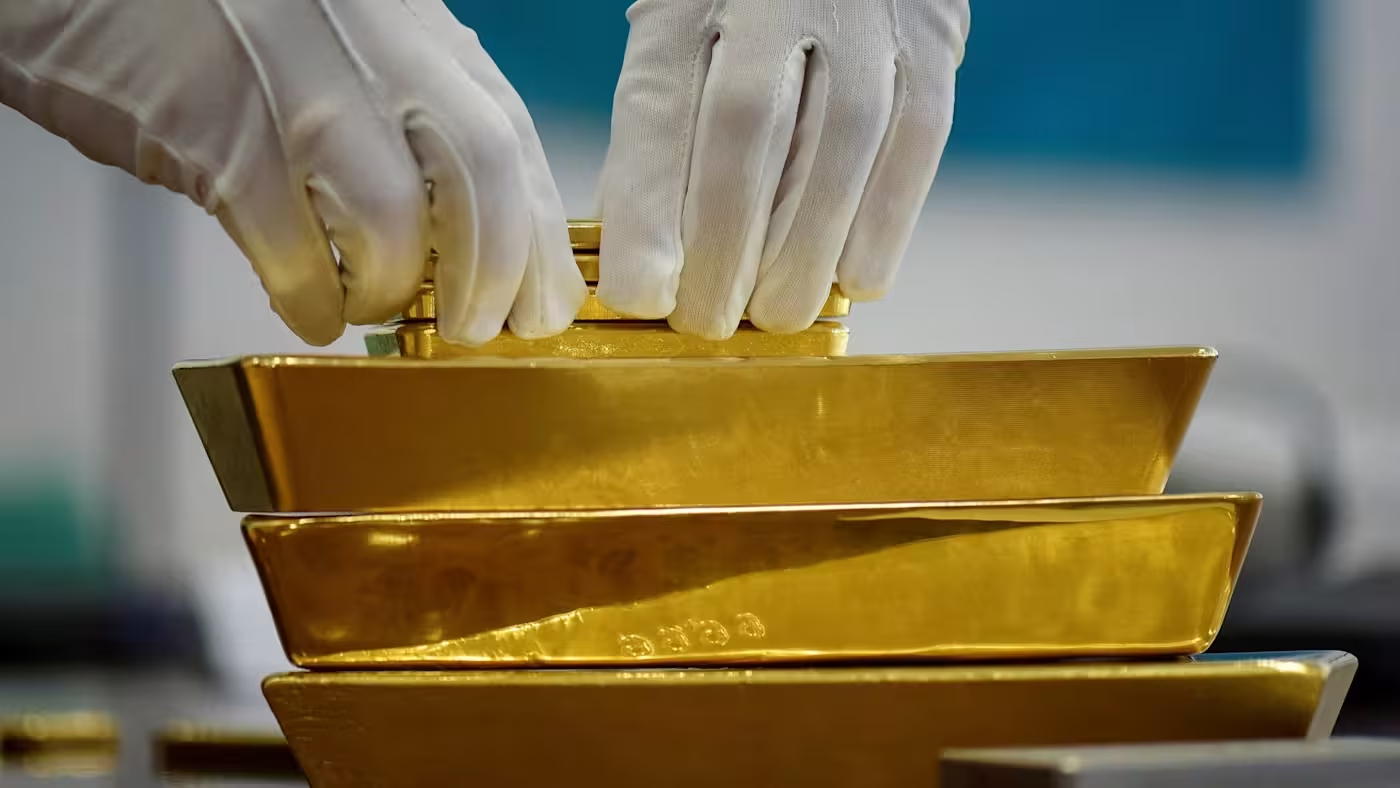
Banks and traders are rapidly expanding precious-metals trading desks and logistics capacity, seeking to capitalize on this year’s historic surge in gold prices. The sharp rise in valuations has unexpectedly turned what was once a sluggish market for bullion trading and metal storage into one of the most profitable segments of the financial sector.
The rapid rise in gold and silver prices in recent days in 2025 has received a fresh boost amid escalating geopolitical tensions between the United States and Venezuela, as well as expectations of interest-rate cuts in the US. On Wednesday, both metals set new record highs.
Gold prices reached $4,500 per troy ounce for the first time on Wednesday morning, while silver climbed above $70 an ounce this week. Since the start of the year, prices are up 71% for gold and 150% for silver.
Against the backdrop of the rally, revenues at leading bank precious-metals trading divisions rose by 50% in the first nine months of the year compared with the same period in 2024, according to data from analytics firm Crisil Coalition Greenwich.
“A very large profit pool is emerging this year, and everyone is acting quite aggressively,” said Callum Minns, a research manager at Crisil. Precious metals, he added, are becoming “an increasingly significant part of the overall market business” at the largest banks.
Combined revenues from precious-metals trading at the 12 largest banks totaled about $1.4bn between January and September, Crisil estimates—putting 2025 on track to become the second-strongest year in the history of gold trading, behind only 2020.
Even banks that had previously shut down their precious-metals operations are now returning to the business. According to market participants, Société Générale, Morgan Stanley, and Mitsui expanded their teams this year. SocGen and Morgan Stanley declined to comment; Mitsui did not respond to a request.
The market’s expansion is intensifying competition beyond the banking sector as well. Non-bank players are seeking to increase their share of the growing segment: Swiss refiner MKS Pamp, financial platform StoneX, and London-based broker Marex have all strengthened their bullion-trading operations this year.
Michael Skinner, head of metals at StoneX, said the market is undergoing a “democratization” and that the growing number of participants would, in his view, ultimately be beneficial.
This year, StoneX—which already had a substantial physical gold-trading business—opened a Comex-approved gold vault in New York and is expanding a UK refinery acquired last year.
In New York, certain Comex-approved vaults can accept metal for delivery against Comex futures contracts. In London—the world’s largest hub for physical gold trading, clearing more than $35tn of bullion a year—banks that are clearing members of the market are required to operate their own vaults. At present, the “Loco London” gold market has just four clearing members.
Until recently, owning a vault was seen as a dull, low-margin business, prompting banks such as Barclays and Scotiabank to sell off their assets in recent years. Interest in vaulting is now returning.
“Most banks either are exploring or have explored vaulting,” said Callum Minns of Crisil. “If you are on the vaulting list, you generate additional revenue compared with everyone else. Returns are modest, but the business is stable.”
According to market participants, Citigroup is now considering opening its own vault. Citi declined to comment.
James Emmett, chief executive of MKS Pamp—whose company acquired Scotiabank’s New York vault in 2021—said that owning a vault enables the development of a custody business with annuity-like income.
MKS Pamp already operates a trading arm, formerly known as MKS, as well as the large Swiss refinery Pamp. These assets were combined in 2021, making the company atypical within the precious-metals processing industry.
This year, MKS Pamp made several senior hires, including the appointment of Paul Waller, former head of precious metals at HSBC, as vice-chairman. The company has also expanded its footprint in Asia, opening a regional headquarters in Hong Kong.
Further growth is planned for next year, Emmett said. Priorities include launching gold options trading and expanding refining capacity in the US. “Our ambition is to become a leading global precious-metals house,” he said. “We do everything except take it out of the ground.”
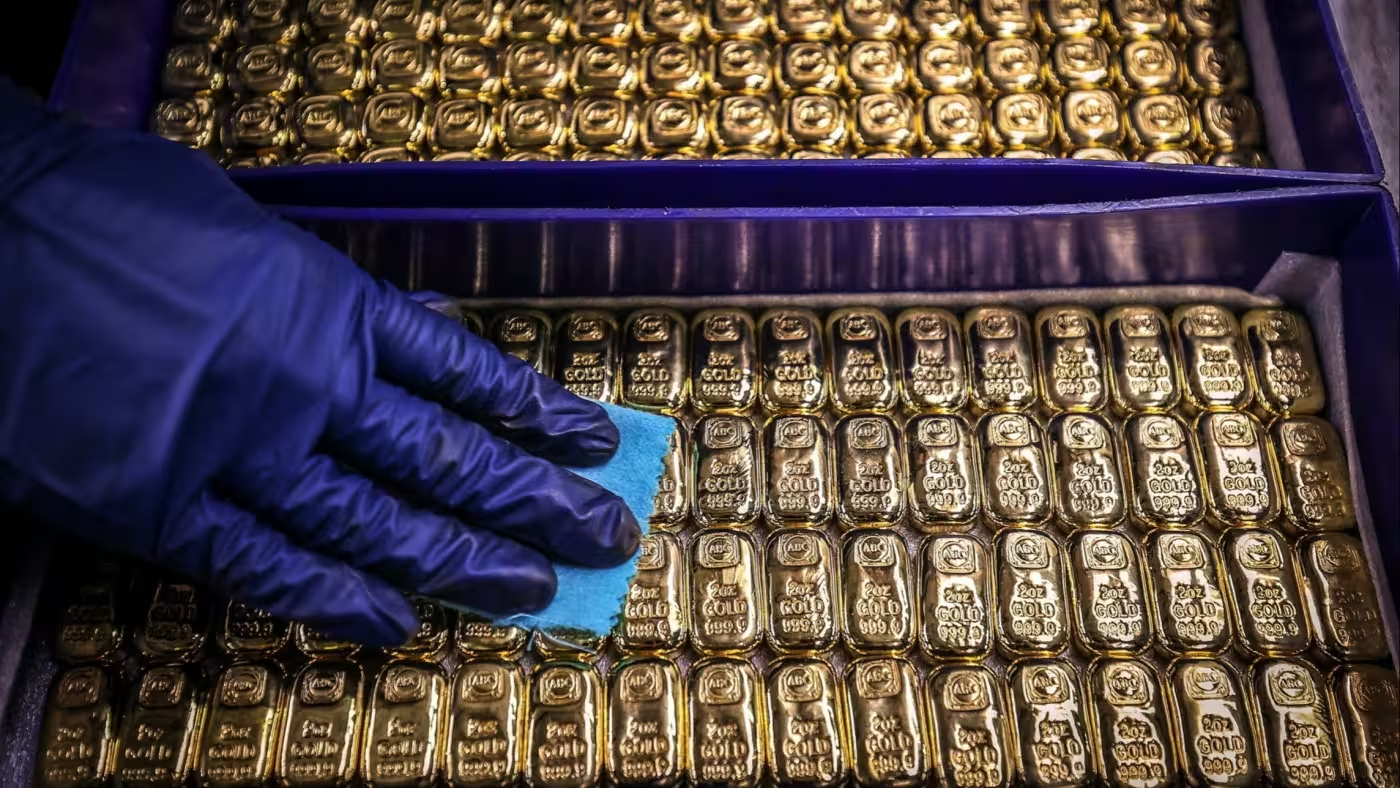
Gold and Silver Hit Record Highs Amid Escalation Risks Around Venezuela and Expectations of U.S. Rate Cuts
Investors Turn to Precious Metals as a Hedge Against Geopolitical and Currency Risks
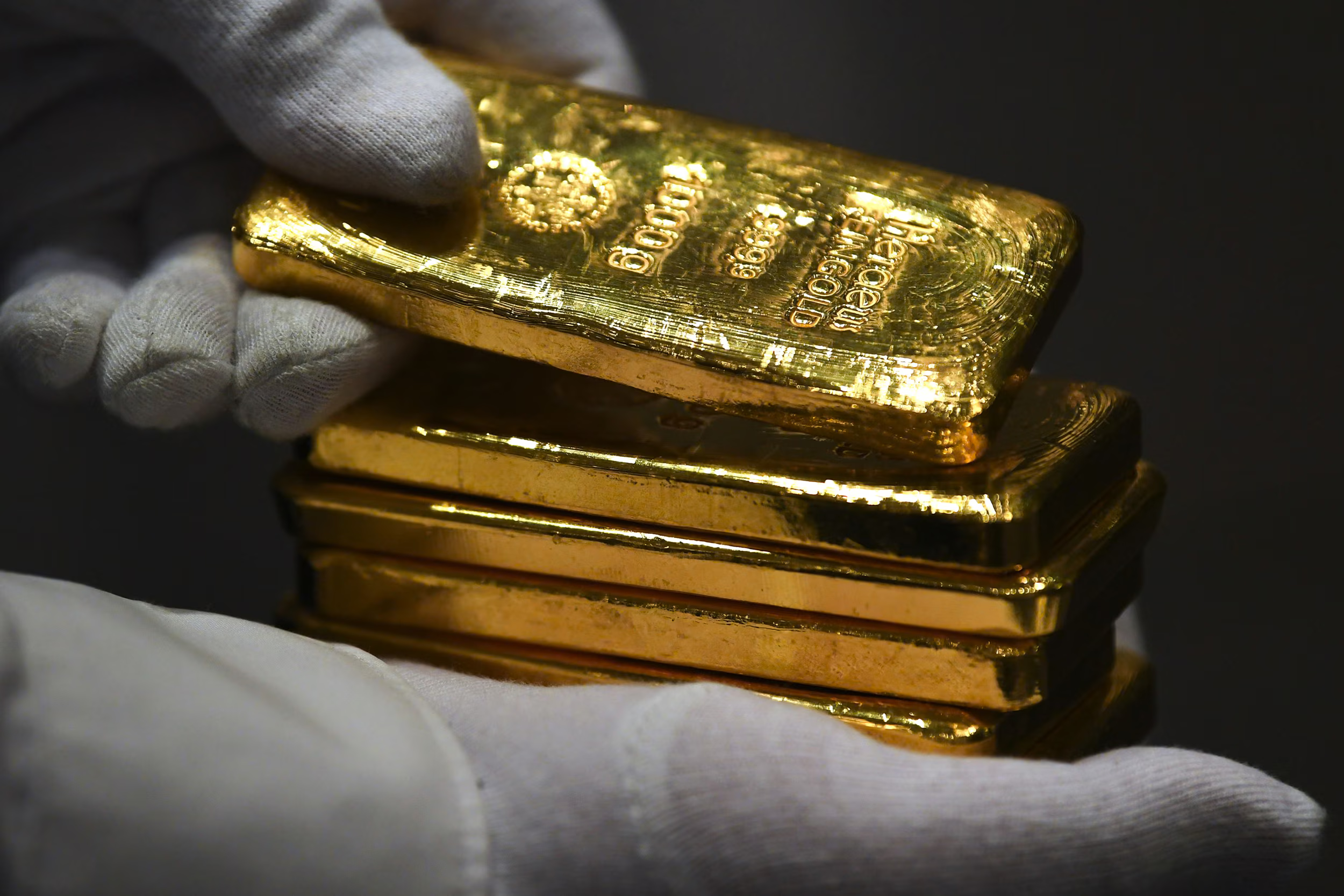
Gold Hits a Record $4,000 per Ounce
Investors Lose Confidence in the U.S. Economy Amid the Ongoing Shutdown
One of the key advantages of Wall Street banks remains access to large balance sheets—a factor that has proved particularly important this year, as the unexpected surge in gold prices has put pressure on the balance sheets of producers and smaller traders.
Many non-bank competitors, however, have deeper expertise in sourcing physical gold. The process is complex because the metal’s origin must be verified to meet the “good delivery” standard and be accepted by the London Bullion Market Association. The risks of acquiring gold that fails to meet these requirements are considered too high, leading many banks to avoid the early stages of the supply chain—prior to refining.
Two Swiss trading houses have recently moved into this segment. Trafigura and Gunvor, traditionally focused on energy and base metals, launched physical gold-trading operations this year, dealing both in dore—gold bars containing impurities produced directly at mines—and in refined metal.
One of the most profitable trades of the year, according to Crisil, was an arbitrage opportunity between New York and London that emerged in January and February. Fears of the introduction of tariffs drove a sharp rise in US physical gold prices relative to London benchmarks.
Not everyone, however, was able to benefit from the surge. Minns noted that banks’ gold-trading revenues this year have been “more uneven” than usual.
Many market veterans welcome the return of precious metals to the center of attention. “At various points in my career, metals simply were not something people talked about,” said Michael Skinner of StoneX. “That has now completely changed.”