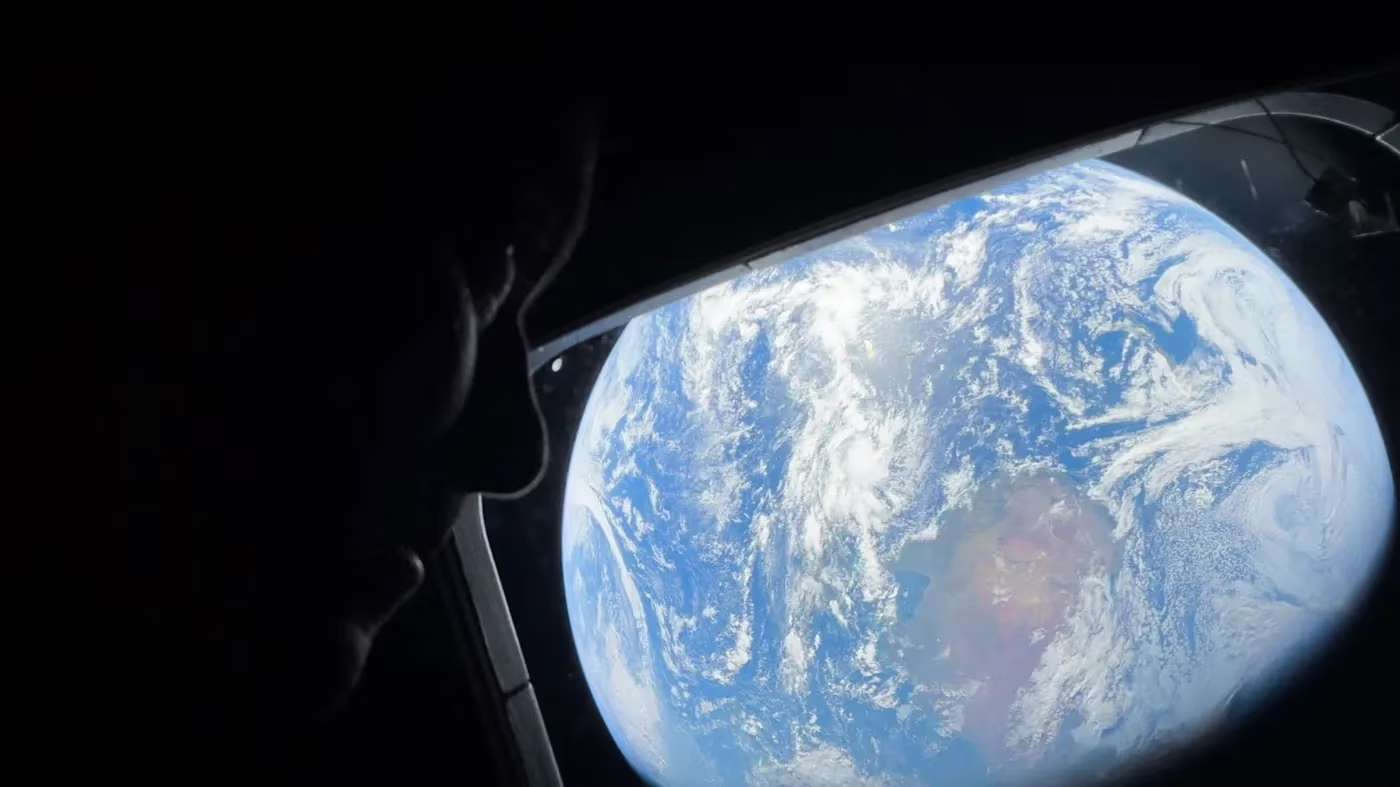
The four astronauts of the Artemis II mission are returning to Earth after circling the Moon—their trajectory carried the crew about 400,000 km from the planet, farther than any humans had ever traveled before.
The American-Canadian team launched on Wednesday, setting off on a 10-day journey spanning about 1 million km. The flight marked a major step in NASA’s strategy to establish a long-term presence on the lunar surface and the first crewed mission toward Earth’s satellite in more than half a century.
When the spacecraft Integrity moved behind the far side of the Moon—a zone beyond radio contact with Earth—communications were cut off for 40 minutes. Emerging from that “radio shadow,” astronaut Christina Koch radioed mission control: “Houston, Integrity, comm check.”
Watching Earthrise, she added: “Asia, Africa, and Oceania—we’re looking at you from up here… You can look up and see the Moon right now. We can see you too.”
Houston replied: “Our one shared system is fragile and interconnected. Those of us who can are looking back at you right now.”
The crew also witnessed a total solar eclipse, as the Moon completely blotted out the solar disc. Mission commander Reid Wiseman called the spectacle “absolutely stunning, unreal.”
“There simply are no fitting words. We’ll have to invent new ones to describe what we are seeing through this window,” he said.
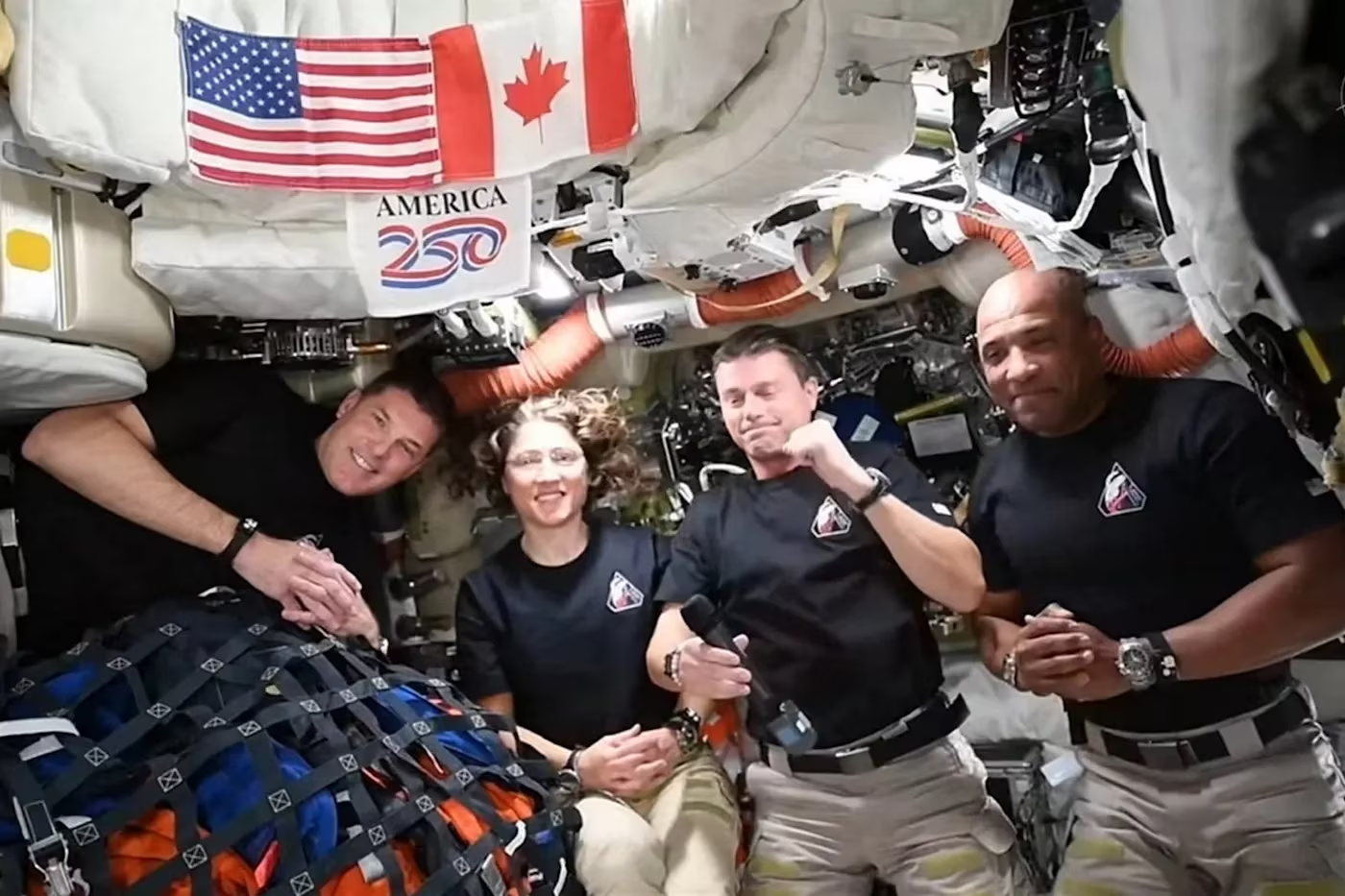
Artemis II crew members Jeremy Hansen, Christina Koch, Reid Wiseman, and Victor Glover speak with U.S. President Donald Trump from aboard the Orion spacecraft. April 6, 2026.
The crew also received a congratulatory call from President Donald Trump. “People have never seen anything like what you are doing right now,” he said. “It truly is something special.” He also pledged that NASA would establish a permanent human presence on the Moon and then press on with missions to Mars.
Canadian astronaut Jeremy Hansen told Trump that the far side of the Moon looks noticeably different from the side visible from Earth—it appears smoother and has fewer large impact craters.
During the flyby behind the Moon at an altitude of more than 6,000 km, Orion enabled the crew to conduct detailed imaging and scientific observations of the lunar surface. The data collected will be transmitted to mission control over the four-day return journey. The mission is scheduled to conclude with a splashdown in the Pacific Ocean off the coast of California at about 5:00 PM local time on Friday.
The flight also brought personal, emotionally charged moments. The astronauts asked for two newly identified craters on the Moon’s surface to be given names—one was proposed as “Integrity,” after their Orion spacecraft, and the other as “Carroll,” in memory of mission commander Reid Wiseman’s wife, who died of cancer six years ago. After making the request, the crew members, overcome with emotion, embraced.
In another moment, Christina Koch described the powerful feeling that came over her as she looked at the Moon: “I suddenly felt drawn to that lunar landscape, and it became real.”
Mission control also played a recorded message from Jim Lovell, a veteran of two Apollo missions, made two months before his death last year. “Welcome to my old neighborhood,” he said. “This is a historic day, and I know how busy you will be, but don’t forget to enjoy the view.”