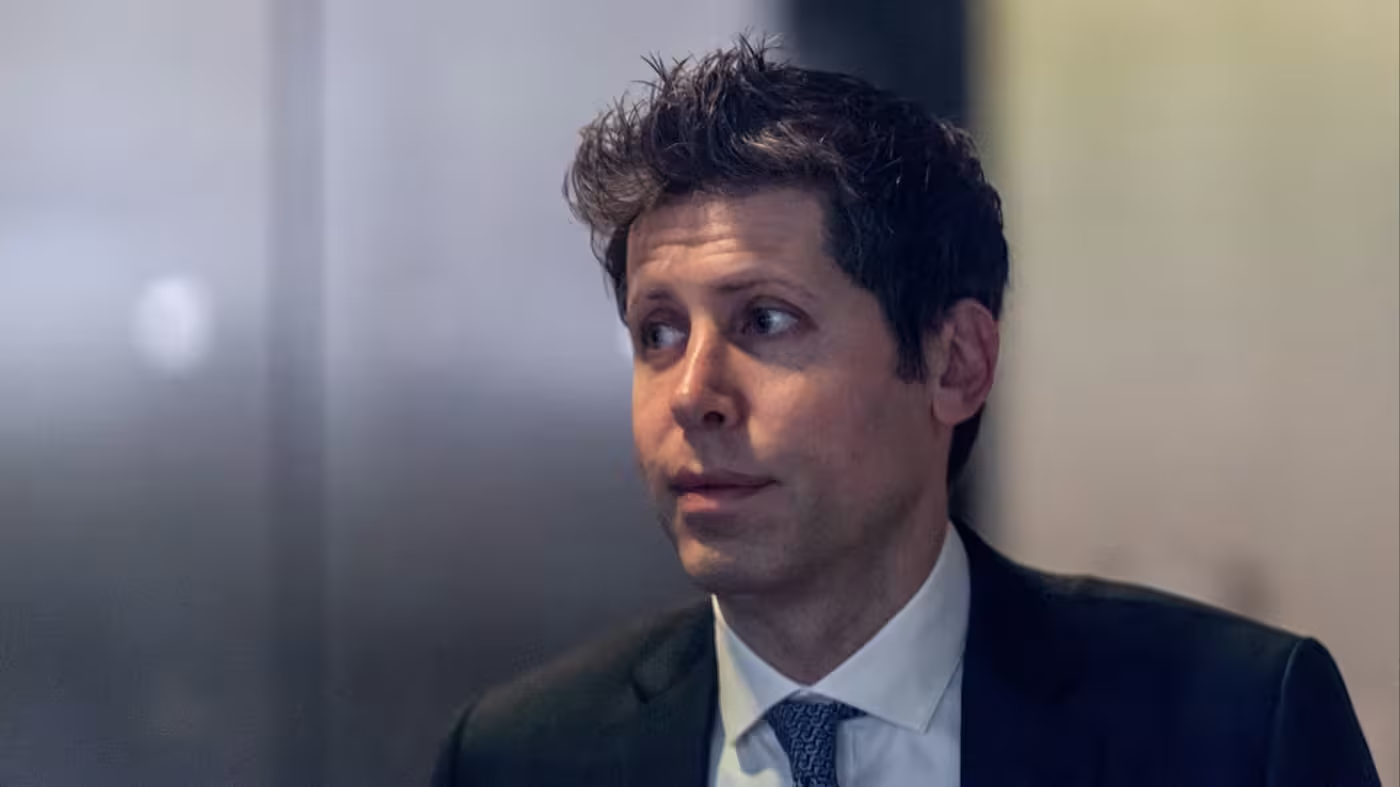
OpenAI chief executive Sam Altman told a court that Elon Musk spent years seeking full control over the company and made what he described as “hair-raising” demands, including the idea of eventually handing control to his children. The testimony came during the legal battle between OpenAI and Musk in Oakland, California.
Altman told jurors that he feared possible “vengeance” from Musk after their fallout over the future of OpenAI—the research lab they co-founded in 2015 as a nonprofit organization.
OpenAI argues that Musk did not object to transforming the company into a for-profit structure as long as he retained the ability to control it. The company says the billionaire’s current lawsuit, in which he accuses Altman of abandoning OpenAI’s original mission, is an extension of a personal conflict.
Musk’s lawsuit could shape the future of OpenAI, whose valuation has now reached $852 billion. The entrepreneur is seeking to block the company’s conversion into a commercial entity and is also pursuing damages exceeding $100 billion.
The hearings largely focused on the struggle for influence within OpenAI. According to Altman, from the company’s founding until his departure from the board in 2018, Musk consistently sought control over the organization.
Musk’s attorney, Stephen Molo, sought to portray Altman as someone obsessed with becoming chief executive. During the proceedings, the court reviewed a 2017 exchange between Altman, Ilya Sutskever, and Greg Brockman—OpenAI’s co-founders. In the messages, colleagues questioned why the CEO position mattered so much to Altman and asked whether his actions were tied to political ambitions. On Tuesday, Altman confirmed that he had at the time considered running for governor of California.
According to the OpenAI chief, Musk at one point demanded a 90 percent stake in the company, later softened the terms, but continued insisting on a controlling share. One of the options discussed was also the integration of OpenAI into Tesla.
Altman said one of the most disturbing moments came when the co-founders asked Musk what would happen to the company’s governance in the event of his death. According to Altman, Musk replied that control could eventually pass to his children.
“Elon said he only works with companies he fully controls,” Altman testified. He added that he considered such a model incompatible with OpenAI’s founding idea, since one of the reasons for creating the organization was to prevent AGI from falling under the control of a single individual.
Although Musk said he might eventually relinquish some authority, Altman said he refused to provide written guarantees that he would not maintain long-term control over the company.
Altman also noted that during his time at startup accelerator Y Combinator, he repeatedly saw founders unwilling to give up power during periods of success. As an example, he cited SpaceX and reports that Musk is seeking special voting shares ahead of the company’s potential IPO.
A day earlier, Ilya Sutskever also testified that Musk sought control over OpenAI because he believed his other companies had suffered after his personal influence weakened.
Altman said he was frustrated after learning about the creation of a competing AI project within Tesla and Musk’s attempts to recruit OpenAI employees.
According to him, people inside the company feared Musk’s unpredictability and discussed whether he might try to retaliate against former colleagues.
The OpenAI chief also said Musk’s management style negatively affected the atmosphere within the organization. He testified that Musk asked for rankings of researchers and their achievements so he could later “take a chainsaw” to the company’s structure, which seriously damaged team morale.
According to Altman, many employees viewed Musk’s departure from OpenAI in 2018 as a relief.
Musk’s lawyer also questioned Altman about his personal financial interests. The OpenAI chief holds stakes worth roughly $2 billion in companies working with OpenAI, including Reddit, energy startup Helion, and chipmaker Cerebras, which is preparing to raise around $5 billion through an IPO.
Molo also referred to testimony from former OpenAI executives and board members who claimed Altman had misled them or lied to them.
When asked by the attorney whether he always tells the truth, Altman replied: “I consider myself a truthful person. Though I’m sure at some point in my life I have lied.”