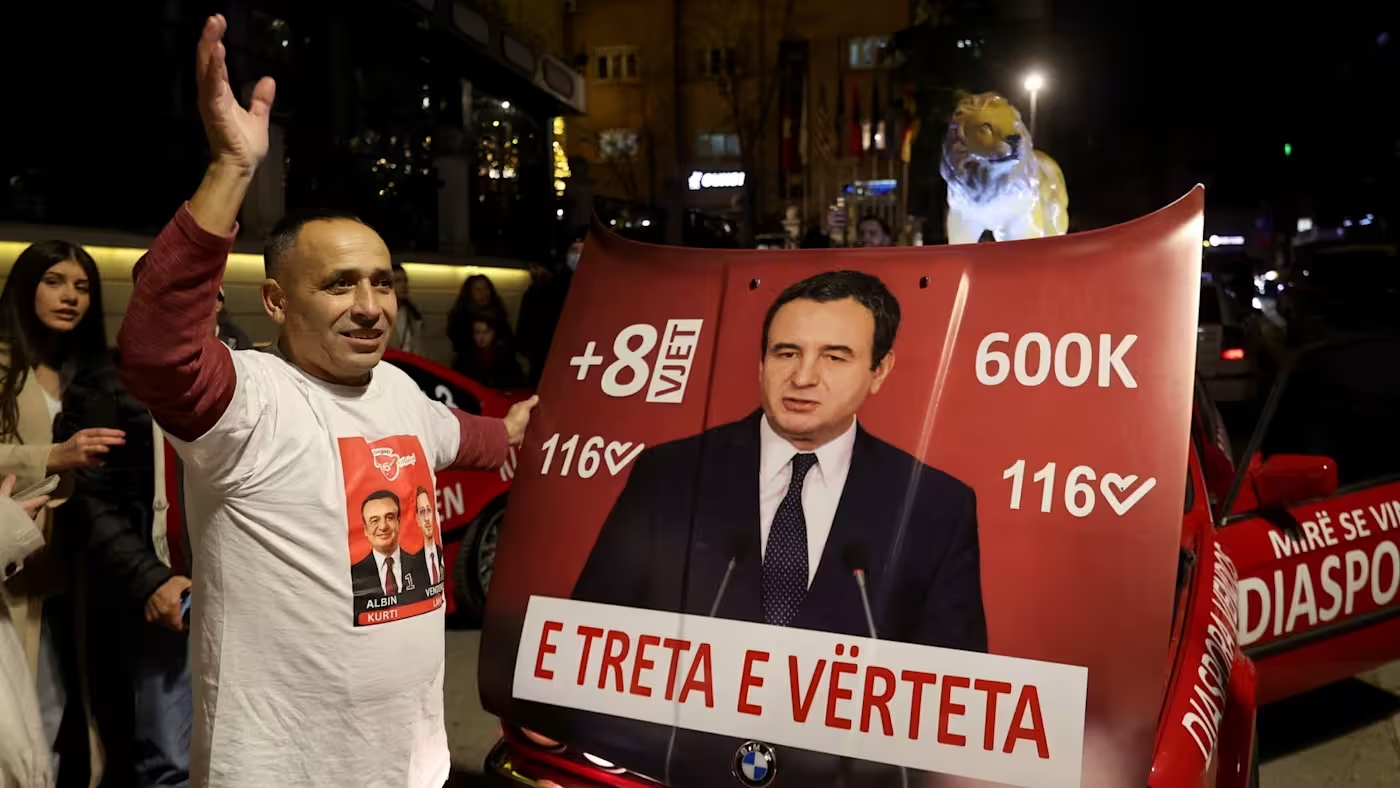
Kosovo’s prime minister, Albin Kurti, is expected to retain his post for another four years after snap elections in which his party significantly improved its showing. The result gives the left-wing nationalist room to soften relations both with western partners and with Serbia, which remains Pristina’s principal foreign-policy adversary.
Kurti’s party, Vetëvendosje, secured 49 percent of the vote, falling just short of an outright majority. Even so, it is likely to be able to form a government with the backing of smaller parties or representatives of ethnic minorities. Neither Kurti nor the opposition managed to secure a majority in elections held in February either, leading to a political stalemate that persisted through much of 2025.
Commenting on the outcome, Kurti described the result as a “convincing mandate” and pledged to move without delay to form a new parliament and cabinet once the results are formally certified. “We have no time to lose—we must move forward together as quickly as possible,” he said.
The prolonged parliamentary crisis this year led to the suspension of EU support, the freezing of key development projects, and continued tensions with the country’s ethnic Serb population, while the process of normalising relations with the former metropole—Serbia—was effectively brought to a halt.
Against this backdrop, Brussels made an encouraging move toward Kurti. On Monday, the EU said it intended to unfreeze €421 million earmarked for Kosovo as early as the beginning of next year. The EU’s foreign-policy chief, Kaja Kallas, and enlargement commissioner Marta Kos said the democratic process had been conducted properly. According to Kurti, EU and World Bank programmes combined are expected to bring Kosovo about €1 billion in the coming years.
Sanctions against Kosovo were imposed by the European Union in 2023 after relations with Serbia deteriorated. Kallas and Kos stressed, however, that Pristina must still take steps toward Belgrade, which does not recognise Kosovo’s independence.
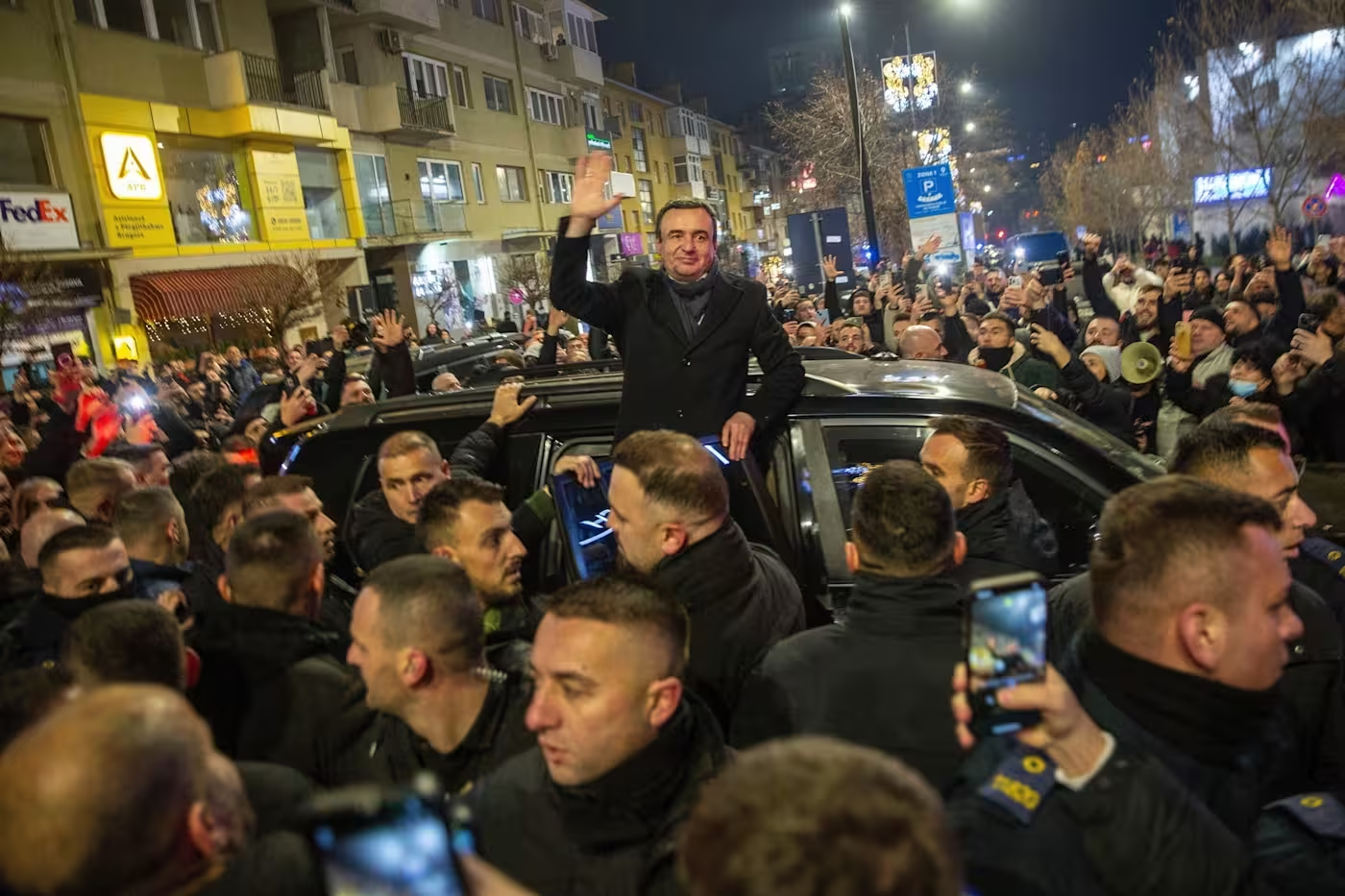
Albin Kurti.
Kosovo broke away from Serbia after a brief but bloody war in 2008, and most western countries have recognised its sovereignty. Kurti, a former anti-Serb resistance activist, insisted that Kosovo’s ethnic Serbs submit to Pristina’s authority and barred Belgrade from providing them with support.
In 2023, however, he agreed—under EU mediation—on a deal with Serbia that was never signed because of disagreements over Serbia’s recognition of Kosovo’s independence.
Kaja Kallas and Marta Kos said that normalisation was “the only way for both sides to make progress on their European paths”. “We expect all obligations to be fulfilled without further delays or preconditions,” they stressed.
A rapid reconciliation is unlikely, however, said Milos Damnjanovic of the Belgrade-based consultancy BIRN. In his assessment, bilateral relations will “remain anything but normal”, as both sides have domestic reasons to sustain the current situation. “Kurti will continue his campaign of pressure on Kosovo Serbs, with the unspoken goal of pushing them to leave,” Damnjanovic said, referring to Pristina’s efforts to sever ethnic Serbs’ financial, social, and political ties with Belgrade.
Serbia’s president, Aleksandar Vucic, is meanwhile facing his most difficult period since coming to power in 2014. The country has been shaken by mass protests for more than a year, while US sanctions on a Russian-owned oil refinery have heightened the risk of a potential fuel crisis.
Damnjanovic does not, however, expect a further deterioration in relations between Serbia and Kosovo, noting that Belgrade is taking into account the mounting pressure on ethnic Serbs in northern Kosovo. “Vucic does not need another crisis,” he said.
Kurti, who held the election over the Christmas weekend when many of his supporters from the diaspora were back in the country, must in the coming months secure the election of a new president by parliament. At present he is just short of the required votes, and failure could once again expose the country to the risk of snap elections.