
A Russian oligarch who reshaped the face of football through unchecked spending—and was later sanctioned and forced by the British government to sell his club—systematically broke the rules while turning Chelsea into one of the game’s dominant teams, according to a Premier League investigation.
The individual in question is Roman Abramovich, whose violations included tens of millions of dollars in off-the-books payments to players, coaches, executives, and unlicensed agents, as well as covert investments in footballers registered to other clubs.
Chelsea’s new owners uncovered some of these breaches and alerted the league before completing their acquisition in 2022, when the club was purchased for approximately $3 billion—a record price for a football asset. The Premier League then launched its own investigation.
Over the past three decades, the Premier League has evolved into the world’s richest and most-watched football competition, becoming one of Britain’s most significant cultural exports. That status has drawn a global class of investors—from private individuals to corporations and sovereign states.
Ownership of Chelsea gave Abramovich—who, like other oligarchs, amassed billions during the wave of privatization that followed the collapse of the Soviet Union—a level of influence and recognition that extended well beyond his wealth. The British government imposed sanctions on him just days after Russia’s invasion of Ukraine in 2022, citing his “close ties” to Vladimir Putin.
After acquiring Chelsea in 2003, Abramovich swiftly altered the balance of power in English football, injecting substantial funds into the west London club and transforming it into a dominant force both domestically and internationally. During his ownership, the club won the Premier League five times and claimed the Champions League—the most prestigious competition in European football—on two occasions. Before his arrival, Chelsea had been crowned English champions only once.
The club offered some of the highest wages and transfer fees in the game, enabling it to join the ranks of elite teams and attract leading players from across the world.
However, the Premier League said that a significant portion of these contracts had been concluded in breach of the rules. A published settlement with the club’s new owners—led by the California-based fund Clearlake Capital and American investor Todd Boehly—states that a nearly three-year investigation, involving the review of thousands of documents, uncovered undisclosed payments totaling around $66 million.
The Premier League said Chelsea would pay a fine of approximately $14 million—the largest in the competition’s history. The club was also barred from registering players for the first team, though that sanction has been suspended for two years. In addition, an immediate nine-month ban has been imposed on registering academy players.
In its statement, the league noted: “It was established that between 2011 and 2018, third parties connected to the club made undisclosed payments to players, unregistered agents, and other individuals.”
Chelsea said it had “voluntarily and proactively disclosed to all relevant regulators potential historical breaches of the rules, including incomplete financial reporting that occurred more than a decade ago,” and had provided thousands of documents.
The Premier League emphasized that the sanctions could have been far more severe had the current owners not cooperated with the investigation. Even so, in recent seasons other clubs have faced harsher punishments—including points deductions—for arguably less serious breaches, prompting criticism that the decision was overly lenient.
“When people are allowed to circumvent the rules with minimal sanctions, it sends entirely the wrong signals,” said Niall Couper, head of the Fair Game campaign.
For the Premier League—whose audience and revenues far exceed those of its counterparts in other countries—the published findings pose a risk of reputational damage. The accompanying 28-page report indicates that Chelsea breached financial and reporting requirements over an extended period without prompting a response from the league.
Several of Abramovich’s key associates held senior roles within English football. According to the Premier League, former Chelsea executives did not cooperate with the investigation.
“The question is—who knew?” Couper said. “Personally, I believe many were reluctant to raise the issue of what Roman Abramovich was doing.”
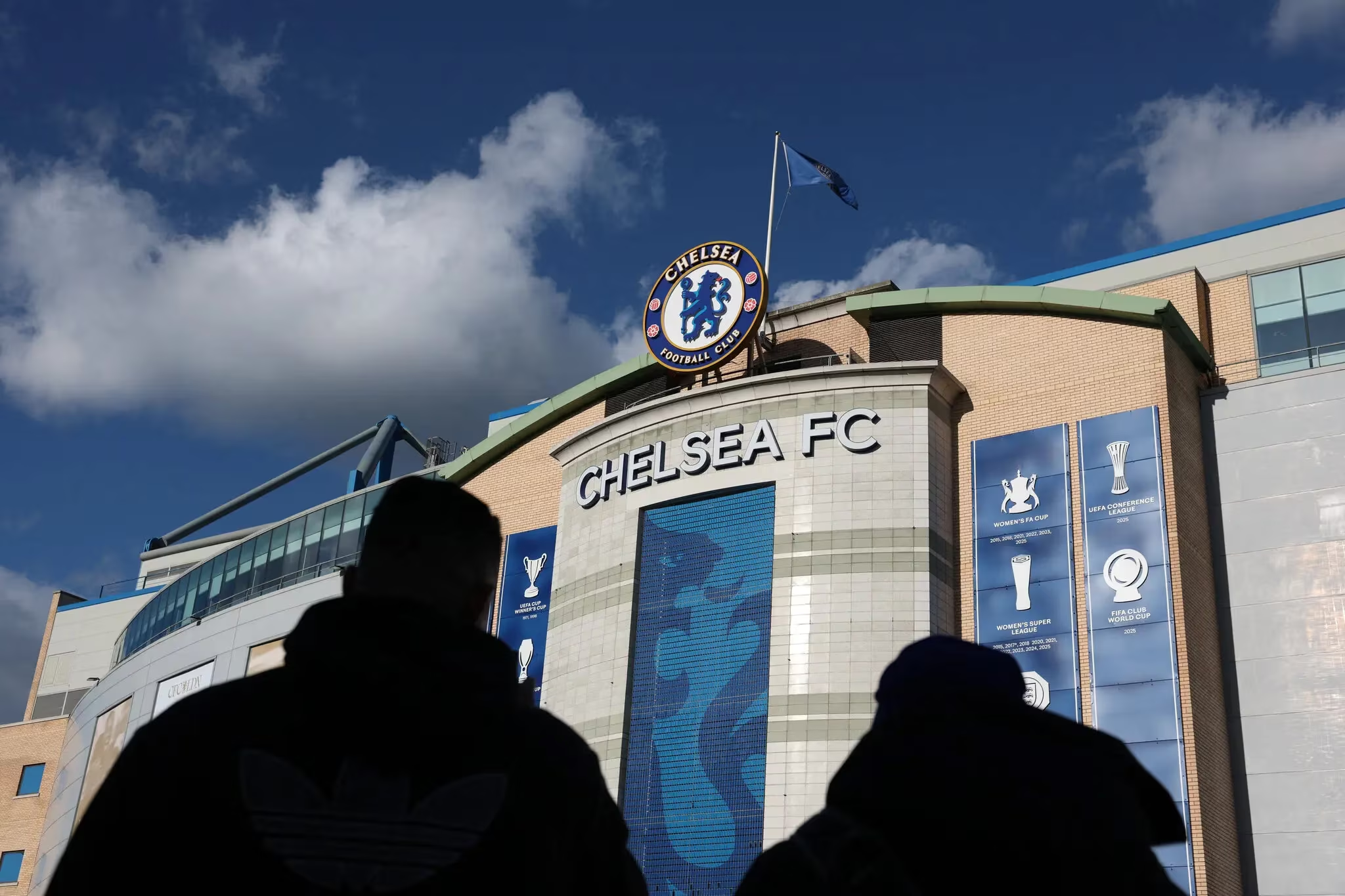
These revelations come as the league awaits the outcome of an even larger case—against Manchester City. Like Chelsea, the club was transformed after the arrival of new owners—the ruling family of the United Arab Emirates, which acquired it in 2008. The Premier League has charged City, the dominant team of the past decade, with around 130 alleged breaches of its rules. The investigation began eight years ago, and the club denies all allegations.