The United States is expanding its military footprint in the Caribbean and sharpening its rhetoric toward Nicolas Maduro, accusing his government of ties to drug cartels and undermining regional security. For Caracas, this is yet another chance to invoke the defense of sovereignty, announce mobilization and call citizens into popular militias. For ordinary Venezuelans—it is simply the next turn in a protracted crisis, where external threats and internal propaganda merge with a devalued currency, rolling blackouts and years of political repression.
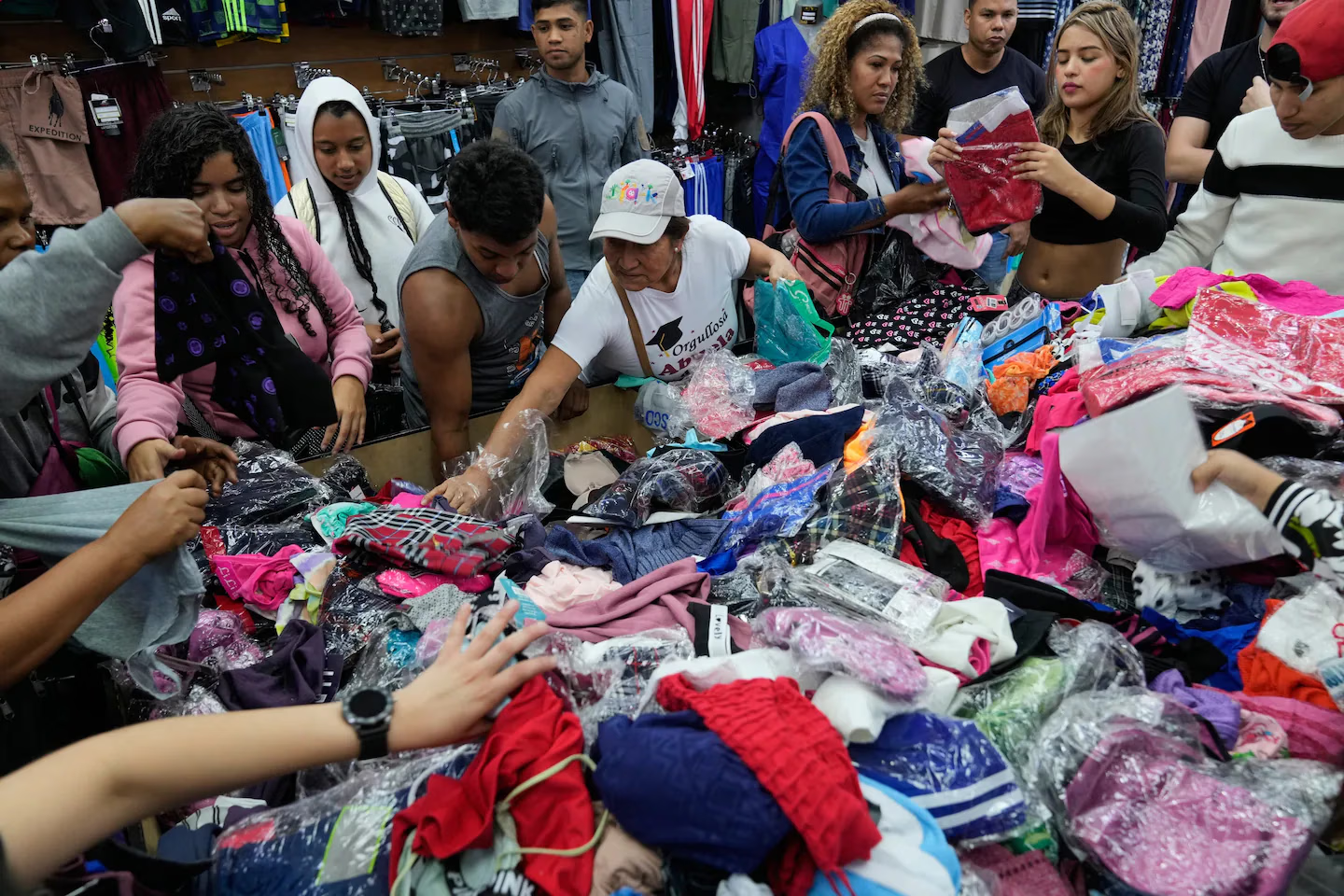
American fighter jets this week escorted a strategic bomber off the Venezuelan coast, while state-run media circulated footage of Venezuelan troops firing into the sky. In eastern Caracas, a supermarket filled with people sweeping goods from the shelves to stock up while they could.
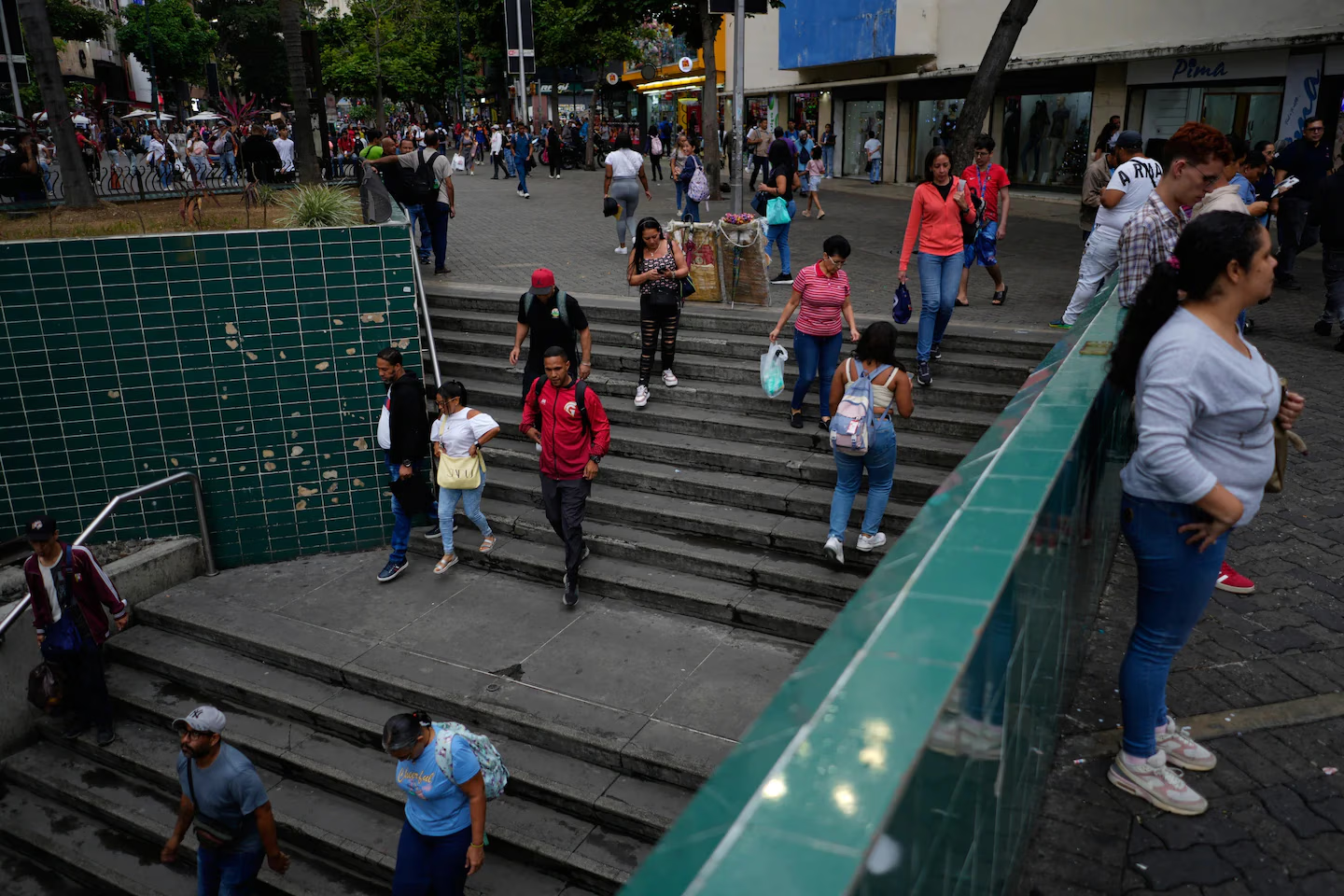
By the next day, the city was calm and the capital had slipped back into its usual rhythm. Residents found themselves caught between the threat of a possible U.S. strike and a deep distrust of the authorities, whom they see as incapable of providing reliable information. People live in a state of suspension, unsure of what comes next, and the grinding uncertainty leads some to think they would rather events simply unfold more quickly.
“On Monday the streets were absolutely empty,” said a woman who agreed to speak on condition of anonymity for fear of reprisals. “By Wednesday it was a normal country again. President Nicolas Maduro’s government is remarkably skilled at manipulating our emotions and downplaying any real threat that could prove fatal for them.”
“This uncertainty is killing me,” she added.
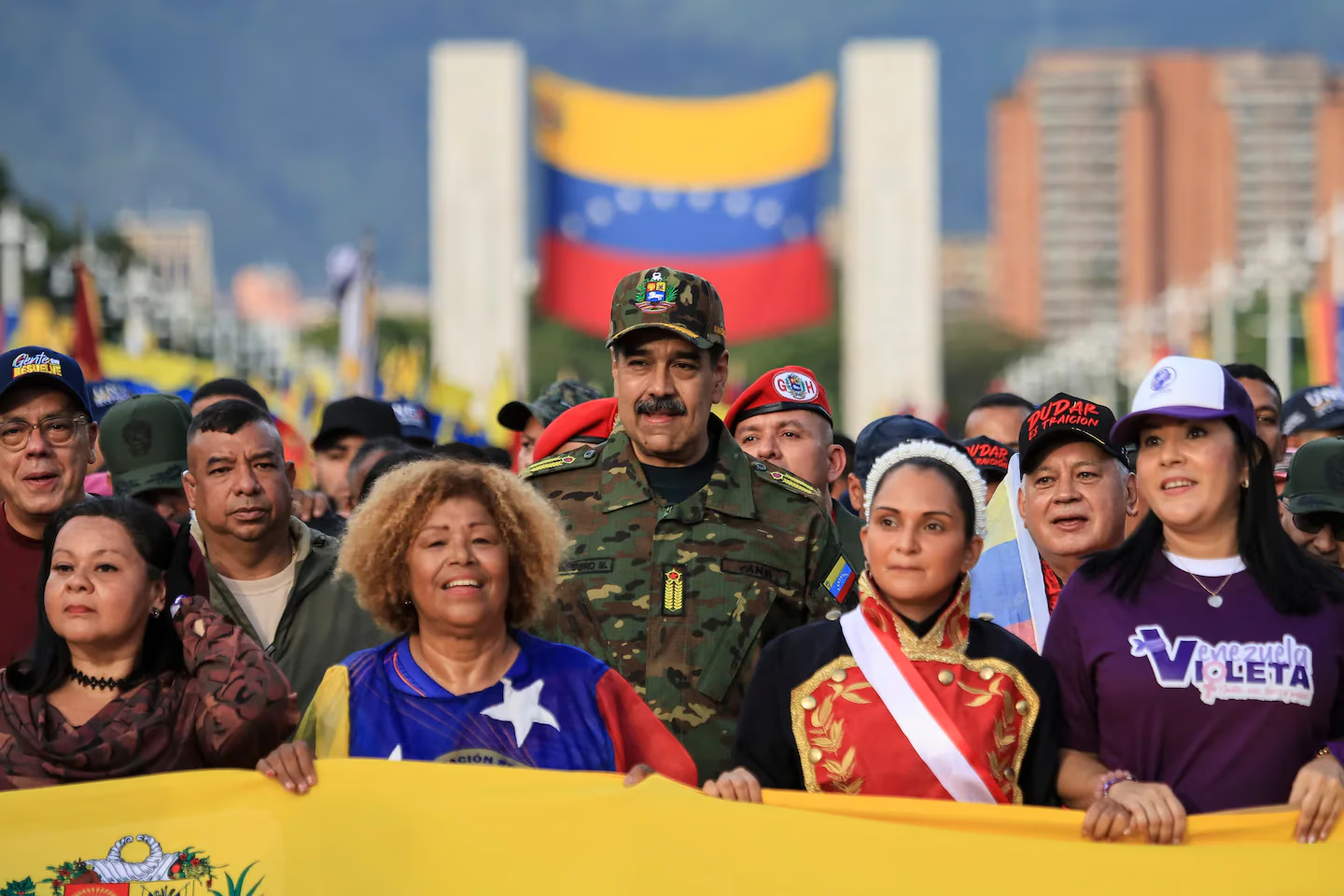
The Trump administration began expanding the U.S. naval presence off Venezuela’s coast in August and in September started striking boats it claims are ferrying drugs to the United States. In response, Maduro announced a mobilization, urged citizens to join militias to defend the country and declared an early start to the Christmas season.
At first, Venezuelans were focused above all on daily survival. The population of this oil-rich country has spent years enduring economic collapse and political repression under an authoritarian socialist government. Inflation and unemployment remain high, water, food, medicine and electricity arrive sporadically, and political persecution has become routine.
But in recent weeks events have accelerated. On Monday, the Trump administration designated the Cartel of the Suns—a purported narcotics network that U.S. officials say is led by Maduro and other senior figures—as a foreign terrorist organization.
On Wednesday, Dominican President Luis Abinader announced that he had authorized U.S. aircraft to use Las Américas International Airport in Santo Domingo and the nearby San Isidro air base for refueling, personnel transfers and equipment movements as part of counter-narcotics operations. Last week, the U.S. Federal Aviation Administration warned airlines flying over Venezuela of a “potentially hazardous situation.” Several carriers suspended their flights. Maduro’s government, by contrast, urged them to maintain their routes.
“The government, acting in full sovereignty, told the airlines: if you do not resume flights within 48 hours, then do not bother coming back at all,” Interior Minister Diosdado Cabello, Maduro’s right-hand man, said on air. “Keep your planes—we will keep our dignity.”
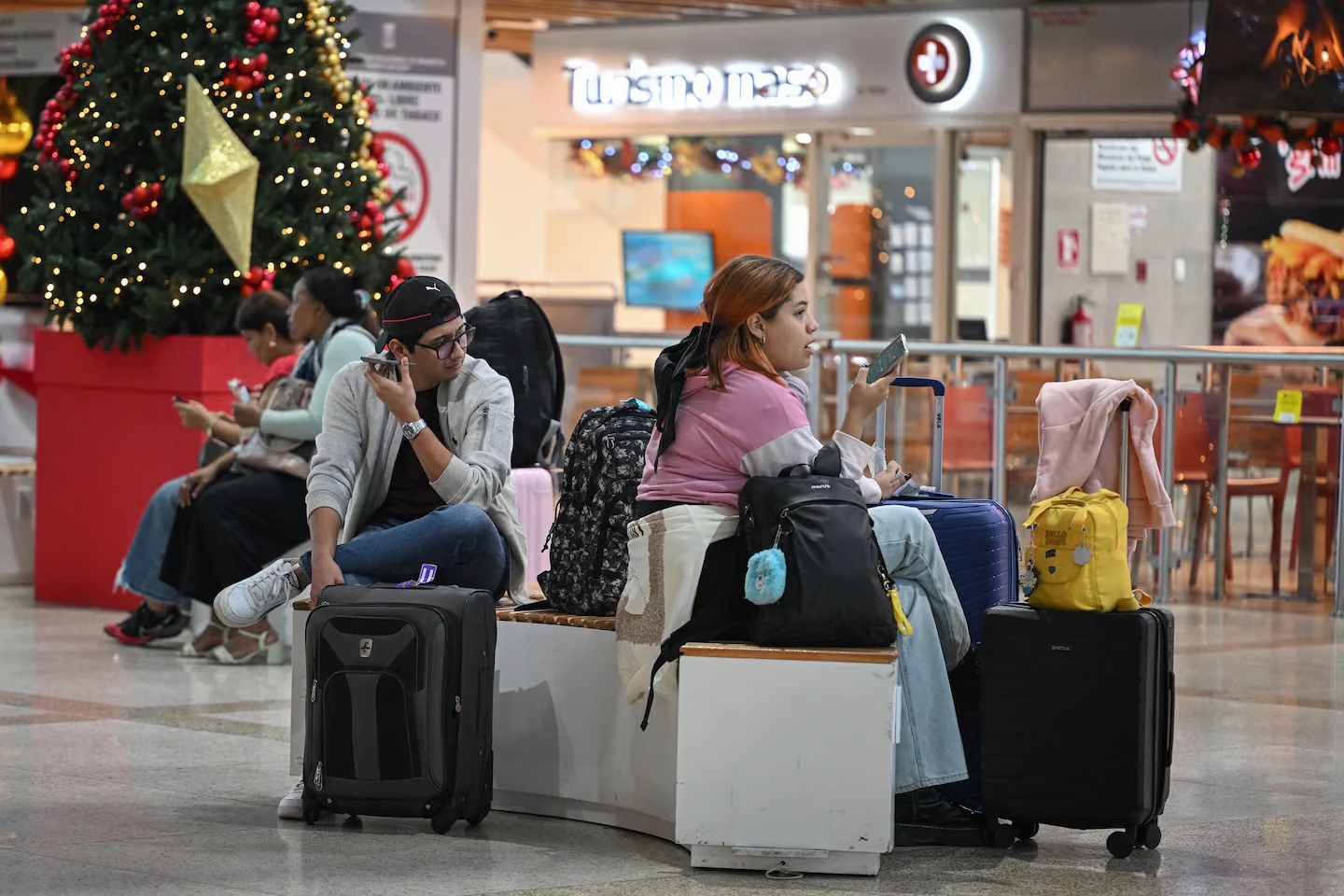
That same day, Venezuela revoked flight permissions for six major international carriers, among them the national airlines of Spain, Portugal, Colombia and Turkey—Iberia, TAP Air Portugal, Avianca and Turkish Airlines. The woman whose story was heard earlier was among the many whose travel plans have now collapsed. “My children were crying. I haven’t seen my sister for a whole year,” she said. “I had planned this for so long.”
At the same time, Maduro’s administration continues to receive deportees sent from the United States to Caracas. “If you truly believe your regime is on the verge of being hit by American Tomahawk missiles, why are you still coordinating with U.S. immigration authorities to accept two deportation flights a week?” asked threat analyst Geoff Ramsey, a senior fellow at the Atlantic Council’s Latin America Center, on X.
People are responding to “the spikes and crashes in narratives and propaganda that spread and evolve like chapters of a soap opera—with ‘climactic episodes’ and all that comes with them,” noted political scientist and social psychology expert Colette Capriles.
On Thursday, November 27, President Donald Trump signaled that some form of action may follow “very soon”. “In recent weeks you’ve been working to contain the Venezuelan drug traffickers—and there are plenty of them,” he told service members during a Thanksgiving call. “Of course, they hardly move anything by sea anymore.”
“We’re going to start cutting off their land routes as well,” Trump continued. “It’s easier by land, and that will begin very soon.” He then added: “We’ve warned them: stop sending poison into our country.”
A Caracas-based chef who spoke on condition of anonymity did not hide his frustration. “Every time the United States issues statements, we start hoping again. We think maybe the moment will come and Maduro will go,” he said. “But nothing happens. We’ve seen this too many times—nothing ever happens.”