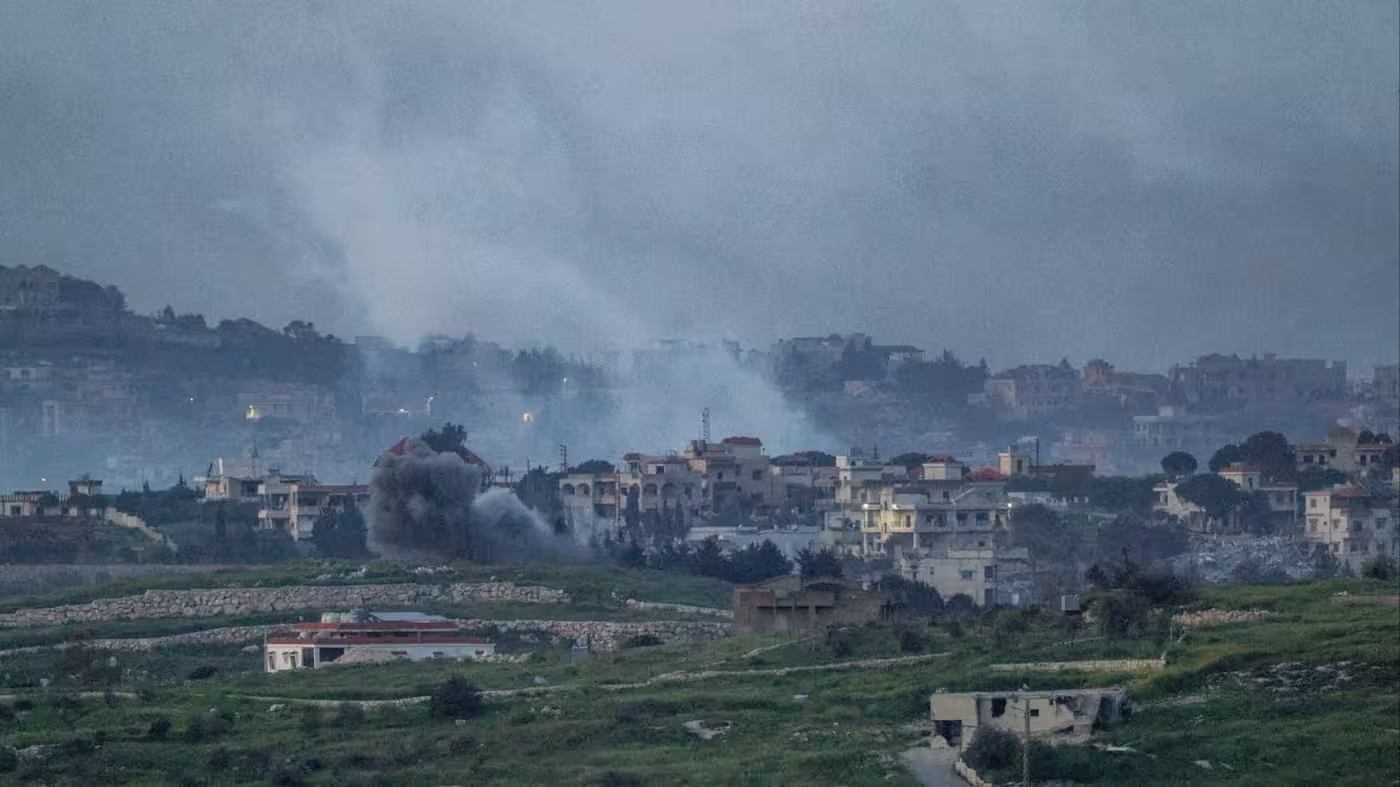
Donald Trump said Lebanon and Israel had agreed to a 10-day ceasefire—a step that could strengthen diplomatic efforts to secure a deal ending the US war with Iran.
According to the American president, the agreement was reached after his talks on Thursday with Lebanon’s president, Joseph Aoun, and Israel’s prime minister, Binyamin Netanyahu. The truce is due to take effect at 12:00 a.m. local time.
Trump’s initiative to halt the fighting between Israel and the Lebanese group Hezbollah, a crucial ally of Iran, is unfolding as mediators try to arrange a second round of talks between Tehran and Washington.
Israeli strikes on Lebanon after the United States and Iran signed a 14-day truce on April 8 became one of the main sources of tension. Tehran and Pakistan, the principal mediator, had insisted that Lebanon be included in the agreement, while the United States and Israel rejected that demand.
Lebanon’s prime minister, Nawaf Salam, welcomed the agreement. Hezbollah said: “Any ceasefire must cover the entire territory of Lebanon and must not give the Israeli enemy freedom of movement.”
Israel has not officially commented on the matter.
Trump said he intended to invite Netanyahu and Aoun to the White House for the first-ever talks between the leaders of countries that do not have diplomatic relations.
Lebanese officials noted that earlier on Thursday Aoun had refused to speak amid the continuing conflict.
The ceasefire announcement came during a visit to Tehran by Pakistan’s army chief, Asim Munir, who held talks with senior Iranian officials, including one of the country’s key military leaders, Mohammad Bagher Ghalibaf.
As recently as Tuesday, Trump had said a new round of talks with Iran could take place as early as this week.
Over the weekend, the sides held lengthy talks in Islamabad on Iran’s nuclear programme and the reopening of the Strait of Hormuz, but made no tangible progress despite more than seven weeks of war.
Trump then ordered a naval blockade of the strait, through which roughly a fifth of the world’s oil and gas supplies normally pass, in order to cut off access to Iranian ports and increase pressure on Tehran.
Even so, contacts between the United States and Iran continued through intermediaries. Two Pakistani government advisers said Munir had signalled to the Iranian side that the strait could be reopened if Trump succeeded in securing a ceasefire between Israel and Hezbollah, creating the conditions for talks to resume.
The United States has linked its truce with Iran to a demand that free navigation through the strait be guaranteed.
Iran refused to reopen it fully after Israel last week began a large-scale bombardment of Lebanon. Tehran also insists on levying fees on tankers using the route, whose closure has already triggered the biggest global energy crisis in decades.
The latest round of fighting between Israel and Hezbollah began after the group opened fire across the border shortly after the US-Israeli attack on Iran, during which Supreme Leader Ali Khamenei was reportedly killed.
Since the escalation, more than 2,100 people have been killed in Lebanon, while Hezbollah has killed 13 Israeli soldiers and two civilians in northern Israel.
Israeli officials had previously raised the possibility of separating the Iranian and Lebanese fronts and increasing pressure on Hezbollah. But according to a person familiar with the situation, Netanyahu was forced to accept the ceasefire under pressure from Trump.
“He has to go along with it because he got Trump to act against Iran exactly as he wanted,” the person said.